Conehead thyme
Thymbra capitata
Family · Lamiaceae · Harmless
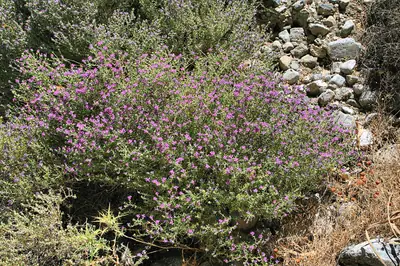
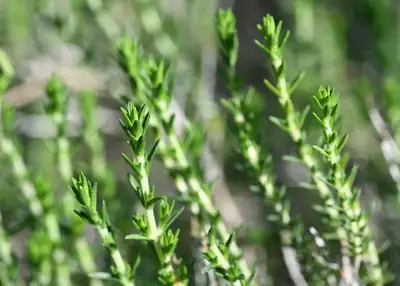


The southern thyme, with compact pink flower heads in late summer and a scent so strong it reads as concentrated oregano. It is the nectar plant behind the thyme honey of the Algarve and Alentejo.
Scrubland · Dunes and sand · Walls and rocks · Fields and pasture
Also known asPersian hyssop, Spanish oregano
How to tell it
Dense purplish-pink flower heads at the tip of each stem, almost spherical. Stiff, pointed, glossy leaves, very unlike the soft leaves of other thymes. An extremely intense scent.
What it is confused with
Oregano
Origanum vulgare
The smell misleads: this thyme smells of concentrated oregano and some call it southern oregano. True oregano has a soft leaf and a flat-topped cluster; this has a stiff pointed leaf and an almost round flower head. Both edible.
What it is for
A strong seasoning for meats and preserves in the south, and the base of one of the Peninsula's most valued honeys. A pinch is enough, because it is far more intense than kitchen thyme.
Traditionally used as food. This is not permission to eat it.
With documented traditional uses. Not a therapeutic indication and not a dose.
Where it occurs
Each square is an area with recorded observations of this plant. The lighter background is the set of areas where any of the entries has been observed, and serves as a reference. Note what this is not: it is not where the plant lives, it is where people record it, so trails and towns always look fuller than the mountains. Data from GBIF.
Sources
Community
No approved contributions for this entry yet.
Nothing appears here without a person reading it first. Contributions do not replace the entry or its warnings: until a botanist confirms, what is written above stands.