Cork oak
Quercus suber
Family · Fagaceae · Harmless
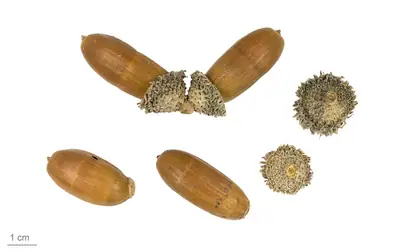
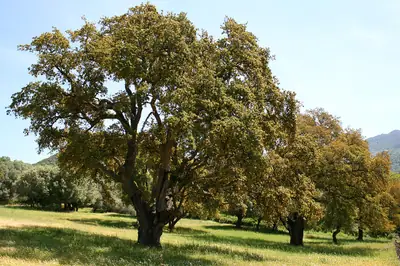


Portugal's national tree and the skeleton of the montado. Unmistakable for its thick, spongy bark, and for the bright red trunk in the year it is stripped.
Montado · Scrubland · Uplands
Also known ascork tree
How to tell it
Press the bark: it gives, because it is cork. Small leaves, dark green above and grey beneath, with a wavy margin. The white numbers painted on trunks mark the year of the last stripping.
What it is confused with
Holm oak
Quercus rotundifolia
Holm oak has dark, cracked bark rather than spongy cork, and stiffer, spinier leaves. They share the montado and the legal protection.
What it is for
Cork, harvested on nine-year cycles without felling the tree. The acorn feeds free-range pigs. An income tree measured in decades.
The law says
Legally protected in Portugal. Felling or cutting cork and holm oaks requires authorisation, even on private land. Do not cut or prune on your own initiative, and stripping has its own rules and calendar.
Where it occurs
Each square is an area with recorded observations of this plant. The lighter background is the set of areas where any of the entries has been observed, and serves as a reference. Note what this is not: it is not where the plant lives, it is where people record it, so trails and towns always look fuller than the mountains. Data from GBIF.
Sources
Community
No approved contributions for this entry yet.
Nothing appears here without a person reading it first. Contributions do not replace the entry or its warnings: until a botanist confirms, what is written above stands.