Wild radish
Raphanus raphanistrum
Family · Brassicaceae · Harmless
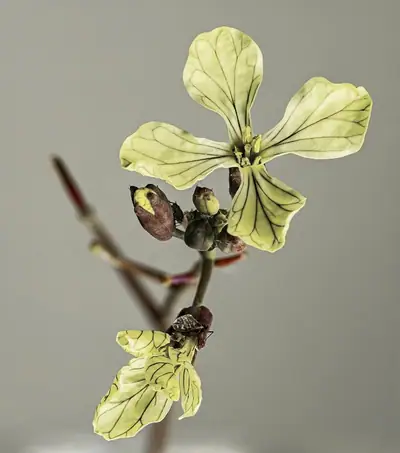
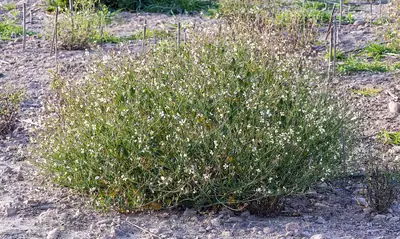


The white and pale yellow that cover cereal fields in spring. It is a radish relative and tastes like one: the young leaf has the same mild bite.
Fields and pasture · Roadsides and waste ground · Town and roadside
Also known aswhite charlock, jointed charlock
How to tell it
Four petals in a cross, white or pale yellow, often with purple veins. The pod is the tell: narrow and constricted between the seeds, like a string of beads.
What it is confused with
Charlock
Sinapis arvensis
Very similar and both edible. Charlock has a brighter yellow flower and a smooth pod; wild radish has a constricted pod. The mistake has no consequence.
What it is for
Young leaves eaten cooked across the Peninsula, and the flowers in salad. The whole European crucifer family is safe, which makes it a good group for beginners.
Traditionally used as food. This is not permission to eat it.
Where it occurs
Each square is an area with recorded observations of this plant. The lighter background is the set of areas where any of the entries has been observed, and serves as a reference. Note what this is not: it is not where the plant lives, it is where people record it, so trails and towns always look fuller than the mountains. Data from GBIF.
Sources
Community
No approved contributions for this entry yet.
Nothing appears here without a person reading it first. Contributions do not replace the entry or its warnings: until a botanist confirms, what is written above stands.