Wild service tree
Sorbus torminalis
Family · Rosaceae · Harmless
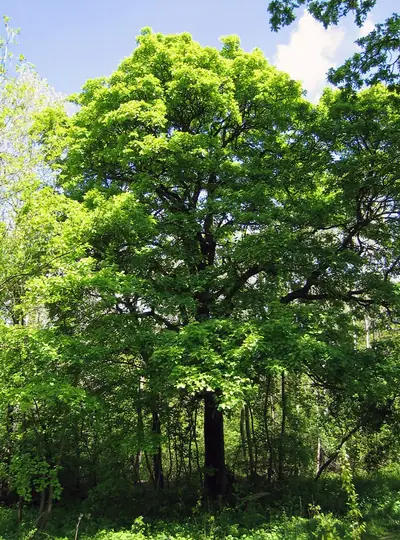
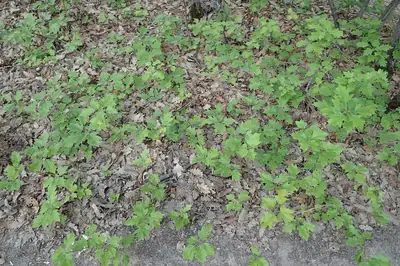


The deciduous woodland tree nobody plants and everyone admires in autumn, when the hand-shaped leaves turn bright red. It bears small brown fruits, eaten once overripe, and its wood is among the hardest in Europe.
Oak woods · Uplands · Montado
Also known aschequer tree, checkers
How to tell it
A tree ten to twenty metres with an open crown. The leaf is the sign: broad, with five to nine pointed uneven lobes, the lower ones larger and spread like an open hand, dark green and glossy above. White flowers in flat corymbs in May, then oval fruits a centimetre and a half long, brown and speckled with pale dots. Old bark flakes in rectangular plates.
What it is confused with
Rowan
Sorbus aucuparia
Rowan has a compound leaf with eleven to fifteen toothed leaflets in two rows, and bright red fruits in big bunches. Wild service tree has a single lobed leaf like a hand, and brown fruits. Neither is dangerous.
Open sheet →What it is for
The fruits were traditionally eaten very ripe, almost bletted, and used in spirits. The dense fine wood served for parts of musical instruments, rules and tool handles.
Traditionally used as food. This is not permission to eat it.
Where it occurs
Each square is an area with recorded observations of this plant. The lighter background is the set of areas where any of the entries has been observed, and serves as a reference. Note what this is not: it is not where the plant lives, it is where people record it, so trails and towns always look fuller than the mountains. Data from GBIF.