Beech
Fagus sylvatica
Family · Fagaceae · Irritating
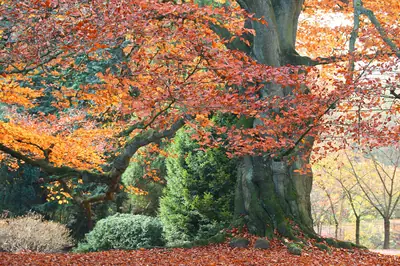
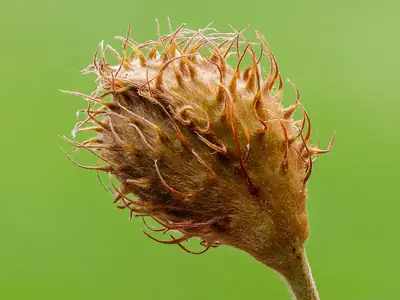


The tree with a smooth grey trunk like elephant hide, making the darkest and quietest woods in Europe. In Portugal it is rare and at the southern limit of its range, mostly in Gerês and Estrela.
Uplands · Oak woods
Also known asEuropean beech, common beech
How to tell it
Smooth grey bark at any age, without cracks, which no other large native tree has. Oval leaves with a wavy margin fringed with hairs when young. Long, sharp, spear-like buds. Almost nothing grows under a beech.
What it is confused with
Sweet chestnut
Castanea sativa
Same family, and the husk confuses. Chestnut's has long fine spines and large nuts inside; beech's is small with soft spines and two triangular seeds. And chestnut bark is cracked, beech bark smooth.
What it is for
Furniture and tool timber, and beechmast was eaten in famine and used to fatten pigs. A note that stays on the sheet: the raw seed contains fagin and in quantity causes sickness; it was eaten roasted.
Traditionally used as food. This is not permission to eat it.
Where it occurs
Each square is an area with recorded observations of this plant. The lighter background is the set of areas where any of the entries has been observed, and serves as a reference. Note what this is not: it is not where the plant lives, it is where people record it, so trails and towns always look fuller than the mountains. Data from GBIF.
Sources
Community
No approved contributions for this entry yet.
Nothing appears here without a person reading it first. Contributions do not replace the entry or its warnings: until a botanist confirms, what is written above stands.