Garden asparagus
Asparagus officinalis
Family · Asparagaceae · Irritating
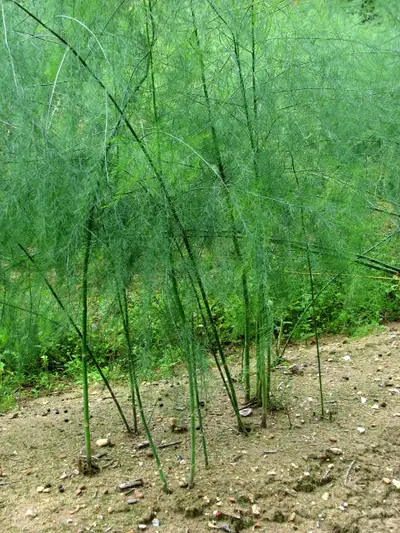
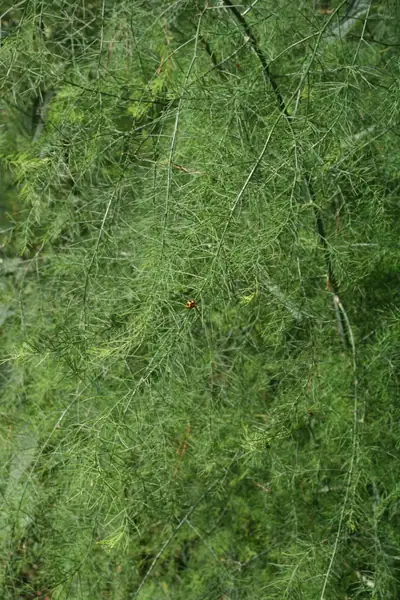


The garden asparagus, which escapes cultivation and turns up on verges, ditches and sands, with thick spears in spring and feathery foliage in summer. The spears are eaten; the red autumn berries are not.
Fields and pasture · Roadsides and waste ground · Streams and ditches · Dunes and sand
Also known asasparagus, sparrow grass
How to tell it
A perennial half a metre to a metre and a half. In spring it sends up straight thick spears with tight scales. Then it opens into feathery foliage: what look like leaves are very fine soft branchlets in bundles, and they do not prick. The flowers are small, greenish and hanging, and in autumn female plants carry red berries. It differs from wild asparagus in having no spines.
What it is confused with
Wild asparagus
Asparagus acutifolius
The wild one has stiff prickly branches that jab the hand, and thin bitter spears; the cultivated one is soft to the touch with thick spears. In both, the berries are not eaten.
Open sheet →What it is for
The young spears were and are eaten cooked, one of Europe's oldest spring harvests. The red berries are toxic and cause vomiting: they are not tasted, and not left within reach of children.
Traditionally used as food. This is not permission to eat it.
Where it occurs
Each square is an area with recorded observations of this plant. The lighter background is the set of areas where any of the entries has been observed, and serves as a reference. Note what this is not: it is not where the plant lives, it is where people record it, so trails and towns always look fuller than the mountains. Data from GBIF.