Sea holly
Eryngium maritimum
Family · Apiaceae · Irritating
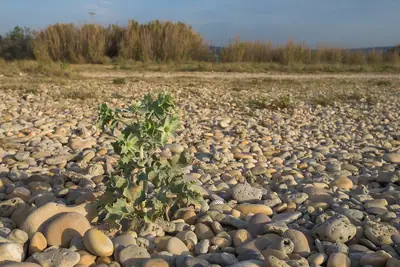
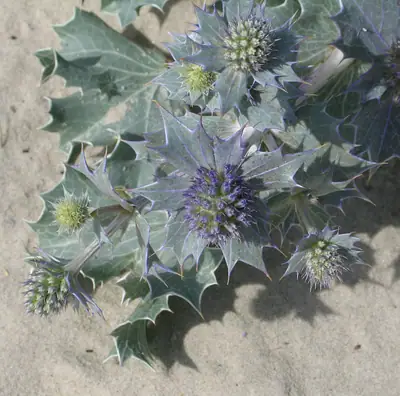


The silver-blue thistle that grows in loose sand and looks made of metal. It is one of the coast's most photographed plants and, precisely for that, one of the most threatened.
Dunes and sand
Also known asseaside eryngo
How to tell it
The whole plant is blue-green and rigid, with leathery spiny-margined leaves and white veins. Round blue flower heads ringed by spiny bracts. It grows alone in the sand.
What it is confused with
Field eryngo
Eryngium campestre
Field eryngo is whitish and lives in dry inland fields, far from the sea; sea holly is bluish and grows only in beach sand.
What it is for
None to encourage
The root was harvested as a sweet and a tonic until the 19th century, and that harvest, together with trampling, is why it is at risk today.
The law says
A protected and declining species. Do not gather or uproot it, and the dune it lives on is classified land in nearly the whole country.
Where it occurs
Each square is an area with recorded observations of this plant. The lighter background is the set of areas where any of the entries has been observed, and serves as a reference. Note what this is not: it is not where the plant lives, it is where people record it, so trails and towns always look fuller than the mountains. Data from GBIF.
Sources
Community
No approved contributions for this entry yet.
Nothing appears here without a person reading it first. Contributions do not replace the entry or its warnings: until a botanist confirms, what is written above stands.