Cardoon
Cynara cardunculus
Family · Asteraceae · Harmless
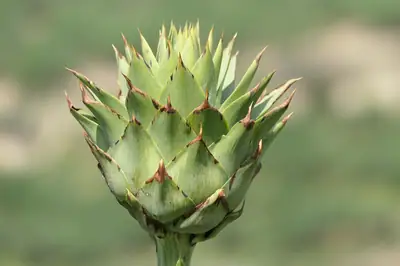
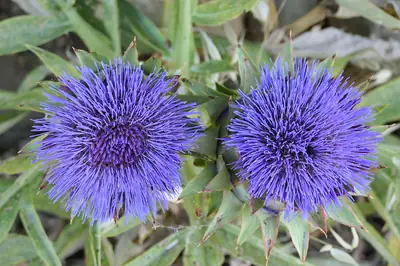


The big grey thistle of dry fields, with bluish purple flower heads the size of a fist. It is the dried flowers of this thistle that curdle the milk for the ewe's cheeses of the Serra, the Alentejo and Extremadura, which is what gives it its rennet name.
Fields and pasture · Roadsides and waste ground · Montado · Scrubland
Also known aswild artichoke, artichoke thistle
How to tell it
A robust plant one to two metres, covered in white hair that gives it a grey look. Huge leaves, deeply cut, with a stout yellow spine at each tip and a broad white midrib. The heads are solitary, four to six centimetres, and the involucral bracts end in stiff spines. Flowers are bluish purple with the stigmas protruding like a brush.
What it is confused with
Dwarf artichoke
Cynara humilis
Dwarf artichoke is low, almost stemless, with the heads rising from a rosette flat on the ground. Cardoon is tall and branched. Both curdle milk and neither is dangerous.
Open sheet →Scotch thistle
Onopordum acanthium
Scotch thistle has spiny wings running the length of the stem, which cardoon lacks. Neither is dangerous, and neither is grabbed without gloves.
What it is for
The dried flowers are the traditional vegetable rennet of the peninsula's ewe cheeses, a living use and not a historical one. The leaf stalks were eaten as a garden cardoon, blanched. The spines are strong: wear gloves.
Traditionally used as food. This is not permission to eat it.
Where it occurs
Each square is an area with recorded observations of this plant. The lighter background is the set of areas where any of the entries has been observed, and serves as a reference. Note what this is not: it is not where the plant lives, it is where people record it, so trails and towns always look fuller than the mountains. Data from GBIF.