Giant fennel
Ferula communis
Family · Apiaceae · Can kill
Read this before the sheet
This plant, or one that resembles it, is dangerous. Identifying is not authorising: no app has the authority to tell you that you may eat or touch a plant.
Emergency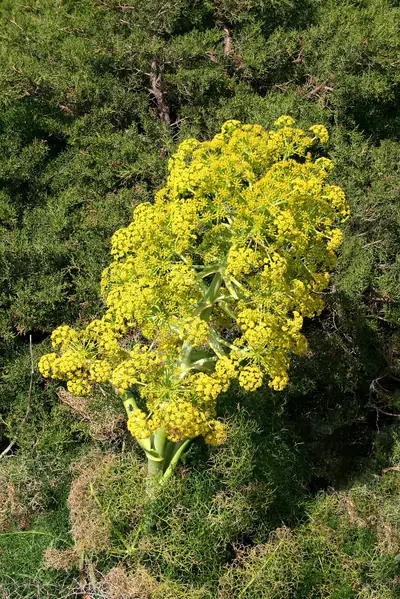


The giant fennel of the south, reaching three metres with yellow umbels the size of a plate. It looks like an overgrown fennel and is not: it has no aniseed smell and it is poisonous, especially to livestock.
Roadsides and waste ground · Fields and pasture · Montado · Scrubland
Also known ascommon giant fennel
How to tell it
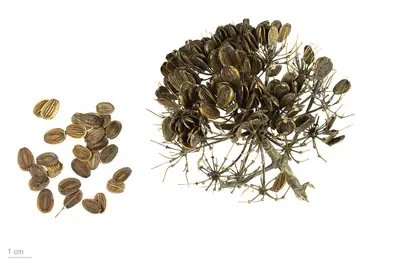
Enormous, with a thick, hollow, grooved stem that stands dead all summer. Leaves finely divided like fennel's but far larger, and with no aniseed smell at all. Yellow umbels, not white.
What it is confused with
Fennel
Foeniculum vulgare
Smell decides, as in this whole family: fennel smells strongly of aniseed, giant fennel smells of nothing edible. Size helps too: giant fennel is twice the size, with a stem as thick as a wrist.
What it is for
None
It causes ferulosis in livestock, a haemorrhagic condition that kills sheep and goats, and there are old records of human poisoning through confusion with fennel. The dry, light stem served as a walking stick and a handle, and in antiquity as a case for carrying embers.
Where it occurs
Each square is an area with recorded observations of this plant. The lighter background is the set of areas where any of the entries has been observed, and serves as a reference. Note what this is not: it is not where the plant lives, it is where people record it, so trails and towns always look fuller than the mountains. Data from GBIF.
Sources
Community
No approved contributions for this entry yet.
Nothing appears here without a person reading it first. Contributions do not replace the entry or its warnings: until a botanist confirms, what is written above stands.