Fennel
Foeniculum vulgare
Family · Apiaceae · Harmless
Read this before the sheet
This plant, or one that resembles it, is dangerous. Identifying is not authorising: no app has the authority to tell you that you may eat or touch a plant.
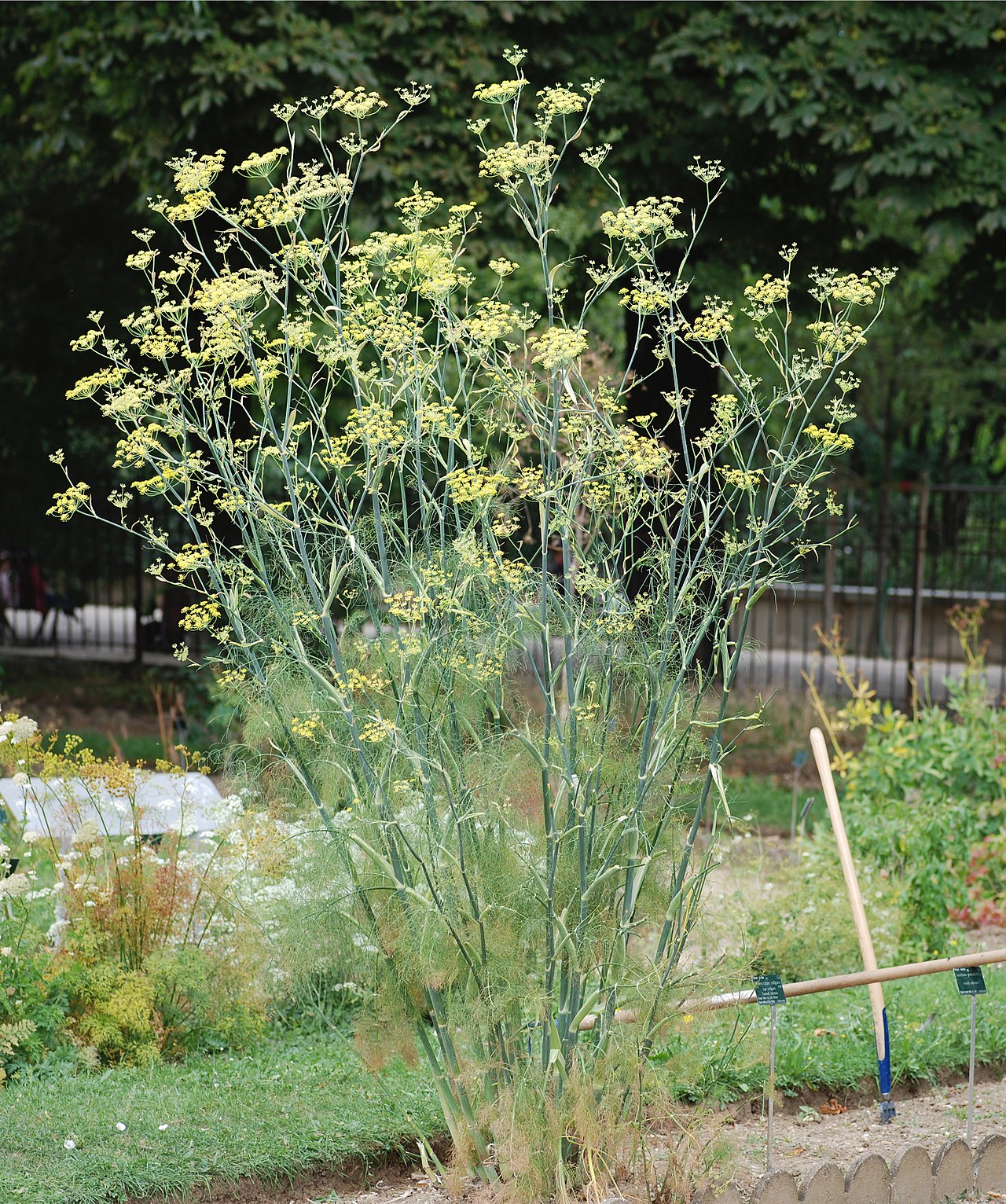


The tall roadside plant that smells of aniseed when crushed between your fingers. Hair-fine leaves, yellow flowers in an umbel, and a scent so distinctive that it, not the shape, is what identifies it.
Roadsides and waste ground · Fields and pasture · Walls and rocks · Town and roadside
Also known aswild fennel, sweet fennel
How to tell it
Crush a leaf: it smells of aniseed, unmistakably. The leaves split into very fine, almost thread-like segments, not into broad toothed leaflets. The stem is smooth and blue-green, with no blotches.
What it is confused with
Hemlock water-dropwort
Oenanthe crocata
Hemlock water-dropwort has no aniseed smell, has broad toothed leaflets like oversized parsley, and grows with its feet in water. Fennel grows dry and always smells.
Open sheet →Poison hemlock
Conium maculatum
Poison hemlock has purple-blotched stems and an unpleasant, mousy smell. Fennel has a clean stem and a sweet scent.
Open sheet →What it is for
Leaves and seeds are traditionally used in cooking, especially with fish and in infusions. One of the most widely used wild plants in Portuguese kitchens.
Traditionally used as food. This is not permission to eat it.
With documented traditional uses. Not a therapeutic indication and not a dose.