Redroot pigweed
Amaranthus retroflexus
Family · Amaranthaceae · Irritating
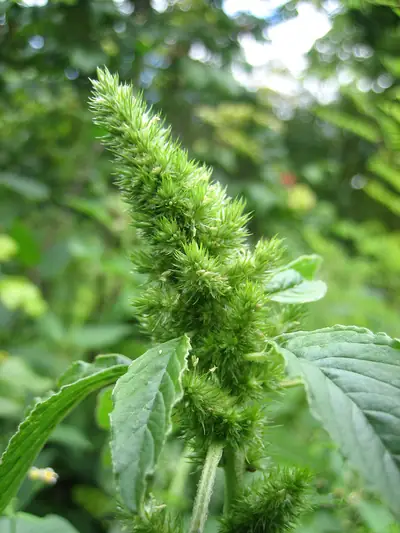
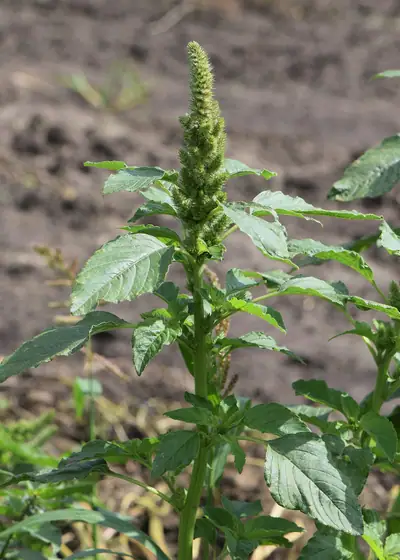


The commonest summer garden weed, with dense rough green spikes at the top and a root that shows red when pulled. It came from America and is now a pest worldwide.
Fields and pasture · Town and roadside · Roadsides and waste ground
Also known ascommon amaranth, rough pigweed
How to tell it
A thick, hairy stem, often reddish at the base, to a metre and a half. Diamond-shaped leaves on long stalks, dull green. The inflorescence is in thick dense spikes, green or whitish, rough to touch because of needle-like bracts. The main root is pink or red.
What it is confused with
Fat hen
Chenopodium album
They grow side by side in the same garden. Fat hen's leaves are covered in a white mealy dust that rubs off; pigweed has no dust and its spike is rough and prickly to the hand. Both were eaten cooked.
What it is for
The young leaves were eaten cooked in many countries, and the seeds are an ancient American grain. But there is a serious brake: the plant accumulates nitrates in fertilised soil, in amounts that have caused fatal poisonings in livestock, and it is that nitrogen-rich ground it likes.
Traditionally used as food. This is not permission to eat it.
Where it occurs
Each square is an area with recorded observations of this plant. The lighter background is the set of areas where any of the entries has been observed, and serves as a reference. Note what this is not: it is not where the plant lives, it is where people record it, so trails and towns always look fuller than the mountains. Data from GBIF.
Sources
Community
No approved contributions for this entry yet.
Nothing appears here without a person reading it first. Contributions do not replace the entry or its warnings: until a botanist confirms, what is written above stands.