Holm oak
Quercus ilex
Family · Fagaceae · Harmless
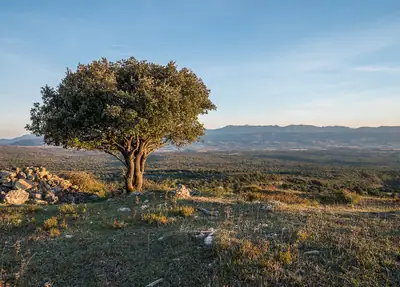
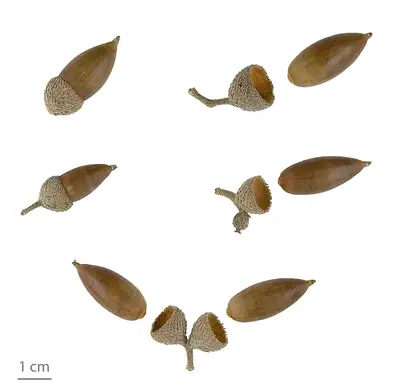


The holm oak of the northeastern Peninsula and the eastern Mediterranean, with a narrower leaf and a more bitter acorn than the southwestern one. Many floras treat the two as a single species, and that is exactly why this sheet exists separately.
Oak woods · Scrubland · Uplands · Montado
Also known asevergreen oak, holly oak
How to tell it
A leathery leaf, dark green above and grey beneath, narrower and longer than the other holm oak's, with spiny teeth mostly on low branches. Dark bark cracked into small squares. The fine distinction is made by leaf shape and region, not by a single mark.
What it is confused with
Holm oak
Quercus rotundifolia
They are the same thing to many floras, which treat the other as a subspecies of this. Where they part: the southwestern one has a rounder leaf and a sweet acorn and belongs to the montado; this has a narrower leaf and a bitter acorn and dominates the northeast and the Mediterranean. No confusion has consequences.
What it is for
Firewood, charcoal and acorns for livestock, like the other holm oak. The acorn is usually more bitter and less used for human food than the southwestern one's.
Traditionally used as food. This is not permission to eat it.
The law says
Like the other holm oak, it is protected in Portugal: felling and cutting require authorisation.
Where it occurs
Each square is an area with recorded observations of this plant. The lighter background is the set of areas where any of the entries has been observed, and serves as a reference. Note what this is not: it is not where the plant lives, it is where people record it, so trails and towns always look fuller than the mountains. Data from GBIF.
Sources
Community
No approved contributions for this entry yet.
Nothing appears here without a person reading it first. Contributions do not replace the entry or its warnings: until a botanist confirms, what is written above stands.