Sheep's sorrel
Rumex acetosella
Family · Polygonaceae · Harmless
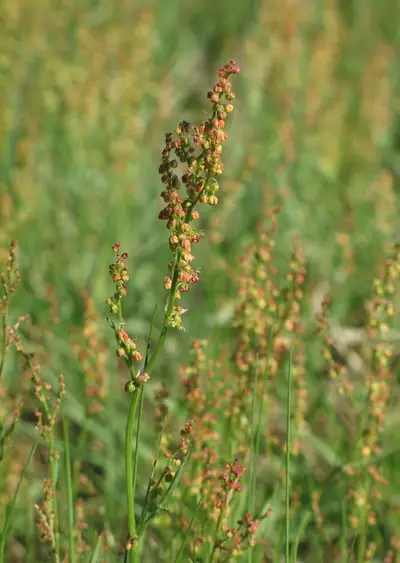
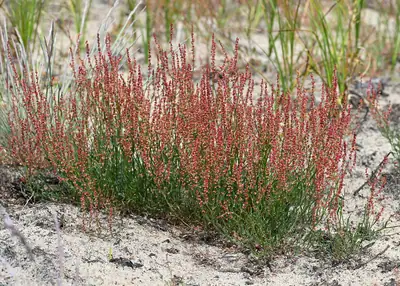


The small sorrel that turns poor sandy fields rust red at the end of spring, when its tiny flowers all ripen at once. It tastes of lemon like the larger sorrel.
Fields and pasture · Uplands · Pine woods · Roadsides and waste ground
Also known asred sorrel, field sorrel
How to tell it
A spear-shaped leaf with two basal lobes pointing outwards, like a halberd, not downwards as in common sorrel. A small plant, twenty to forty centimetres. An immediate sour taste.
What it is confused with
Common sorrel
Rumex acetosa
Size and the leaf's basal lobes: pointing down on common sorrel, outwards on sheep's sorrel. Both edible and with the same taste.
What it is for
Leaves in salad and sauces, like common sorrel, and the same warning: the sourness is oxalic acid and it is a plant for moderate quantities. It is also a faithful indicator of poor acid soil, much used by anyone assessing land.
Traditionally used as food. This is not permission to eat it.
Where it occurs
Each square is an area with recorded observations of this plant. The lighter background is the set of areas where any of the entries has been observed, and serves as a reference. Note what this is not: it is not where the plant lives, it is where people record it, so trails and towns always look fuller than the mountains. Data from GBIF.
Sources
Community
No approved contributions for this entry yet.
Nothing appears here without a person reading it first. Contributions do not replace the entry or its warnings: until a botanist confirms, what is written above stands.