Alfalfa
Medicago sativa
Family · Fabaceae · Harmless
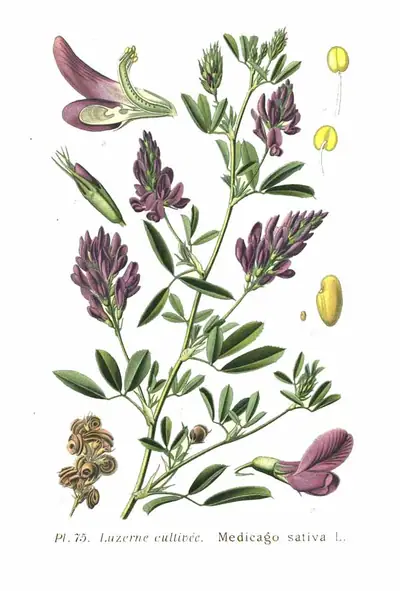
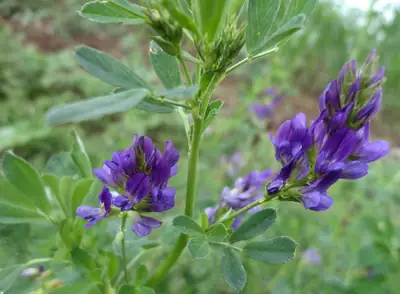


The most cultivated forage crop in the world, sown for thousands of years and gone feral on any verge. It is known by its corkscrew-coiled pod, which no other native legume matches.
Fields and pasture · Roadsides and waste ground · Town and roadside
Also known aslucerne, purple medick
How to tell it
Three elongated leaflets toothed only at the tip, the middle one on a longer stalk. Purple-blue flowers in short tight clusters. The pod coils in two or three complete turns, like a spring, and that is the definitive sign.
What it is confused with
Red clover
Trifolium pratense
Both have three leaflets and purple flowers. Clover makes a dense round head and hides its pod; alfalfa makes loose clusters and its pod coils in a clearly visible spiral.
What it is for
First-rate fodder and a nitrogen-fixing green manure. The sprouted seeds are eaten in salad, a modern use. The raw adult plant is not human food: it is tough and contains saponins. The sprouts and seeds contain canavanine, linked to lupus flares, and raw sprouts are a known source of bacterial contamination.
Traditionally used as food. This is not permission to eat it.
Where it occurs
Each square is an area with recorded observations of this plant. The lighter background is the set of areas where any of the entries has been observed, and serves as a reference. Note what this is not: it is not where the plant lives, it is where people record it, so trails and towns always look fuller than the mountains. Data from GBIF.
Sources
Community
No approved contributions for this entry yet.
Nothing appears here without a person reading it first. Contributions do not replace the entry or its warnings: until a botanist confirms, what is written above stands.