White clover
Trifolium repens
Family · Fabaceae · Harmless
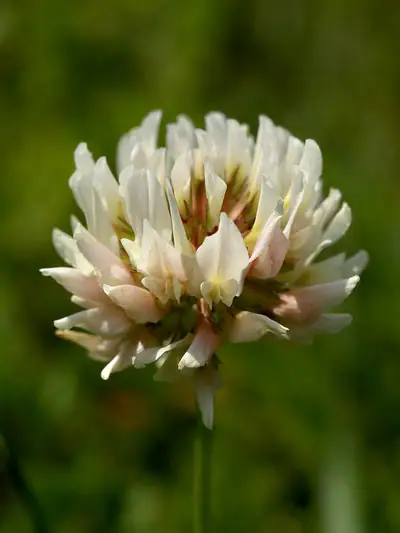
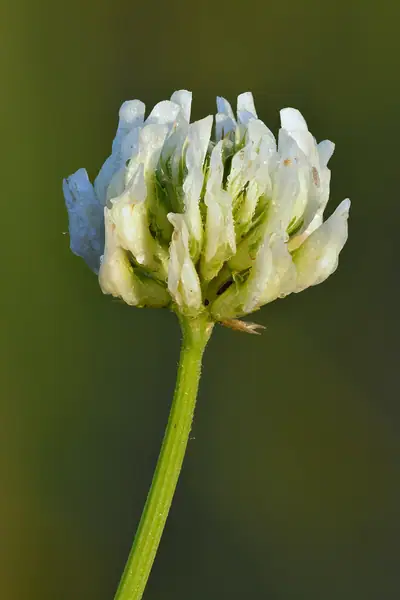


The clover whose four-leaved form everyone hunts for, present in any lawn and pasture in the country. It fixes nitrogen in the soil and is among the plants that feed the most bees in Portugal.
Fields and pasture · Town and roadside · Roadsides and waste ground · Uplands
Also known asDutch clover, shamrock
How to tell it
Three oval leaflets, each with a pale V mark, on creeping stems that root at the nodes. Round white flower heads that turn brown and hang down once pollinated.
What it is confused with
Bermuda buttercup
Oxalis pes-caprae
The childhood confusion. Clover has oval leaflets with a V mark and a white flower head; sourgrass has notched heart-shaped leaflets and a five-petalled yellow flower.
What it is for
First-rate fodder and green manure. The flowers are eaten raw in salad and the leaves cooked, though in quantity they sit heavily.
Traditionally used as food. This is not permission to eat it.
Where it occurs
Each square is an area with recorded observations of this plant. The lighter background is the set of areas where any of the entries has been observed, and serves as a reference. Note what this is not: it is not where the plant lives, it is where people record it, so trails and towns always look fuller than the mountains. Data from GBIF.
Sources
Community
No approved contributions for this entry yet.
Nothing appears here without a person reading it first. Contributions do not replace the entry or its warnings: until a botanist confirms, what is written above stands.