Bramble
Rubus ulmifolius
Family · Rosaceae · Irritating
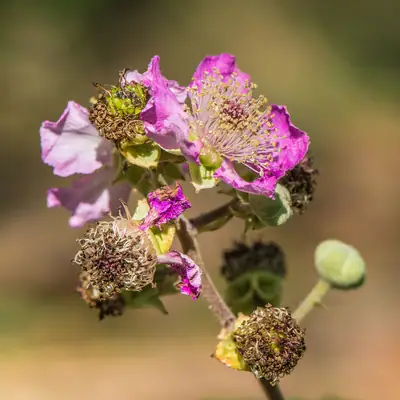
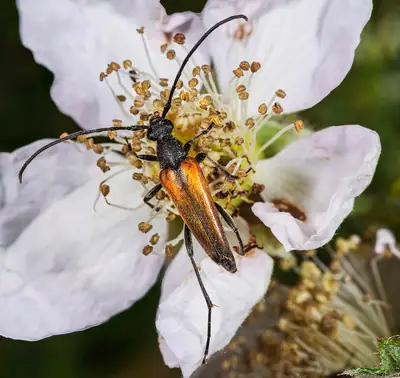


The wall of thorns that closes half the shortcuts in this country, and which in August becomes the best thing beside the path. Wild blackberries are not bought, they are picked.
Roadsides and waste ground · Streams and ditches · Scrubland · Fields and pasture
Also known asblackberry, elmleaf blackberry
How to tell it
Arching canes with curved thorns, leaves divided into five leaflets with a whitish underside. White or pink flowers in May, fruit turning green to red to glossy black.
What it is confused with
Dog rose
Rosa canina
They share the hedge and the thorns. Dog rose bears an elongated red hip, not a black berry made of many beads. Both fruits are usable.
What it is for
Ripe blackberries are eaten raw, in jam and in liqueur. The leaves served as an astringent infusion in folk medicine. Pick above knee height and away from dusty roads.
Traditionally used as food. This is not permission to eat it.
With documented traditional uses. Not a therapeutic indication and not a dose.
Where it occurs
Each square is an area with recorded observations of this plant. The lighter background is the set of areas where any of the entries has been observed, and serves as a reference. Note what this is not: it is not where the plant lives, it is where people record it, so trails and towns always look fuller than the mountains. Data from GBIF.
Sources
Community
No approved contributions for this entry yet.
Nothing appears here without a person reading it first. Contributions do not replace the entry or its warnings: until a botanist confirms, what is written above stands.