Fool's watercress
Apium nodiflorum
Family · Apiaceae · Irritating
Read this before the sheet
This plant, or one that resembles it, is dangerous. Identifying is not authorising: no app has the authority to tell you that you may eat or touch a plant.
Emergency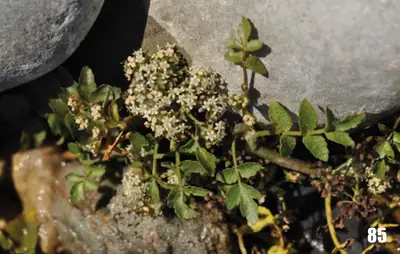


The creeping umbellifer that carpets ditches and clean streams, bright green and parsley-like. The English name says it all: it is fool's watercress, because anyone gathering it to eat risks taking hemlock water-dropwort home in the bunch.
Streams and ditches · Fields and pasture
Also known asfool's cress
How to tell it
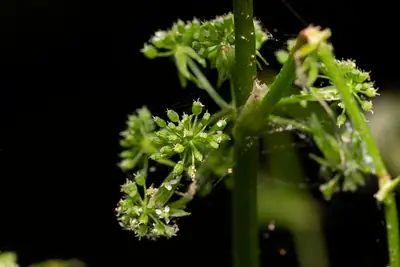
Creeping or sprawling, with hollow stems that root at the nodes. Leaves divided into a row of oval, evenly toothed, glossy green leaflets. Small white umbels emerging opposite the leaves, on almost no stalk.
What it is confused with
Hemlock water-dropwort
Oenanthe crocata
They grow side by side. Fool's watercress creeps at ankle height; hemlock water-dropwort is robust and stands above the knee, with a bunch of yellowish finger-roots and sap that darkens in air. When in doubt, and there is always doubt, do not gather.
What it is for
It was traditionally eaten in salad in some regions, and that is exactly why it is here without the edible tag: it shares the ditch with hemlock water-dropwort, which kills, and with watercress, which is eaten. A plant whose identification depends on getting three lookalikes right is not a plant to gather.
Where it occurs
Each square is an area with recorded observations of this plant. The lighter background is the set of areas where any of the entries has been observed, and serves as a reference. Note what this is not: it is not where the plant lives, it is where people record it, so trails and towns always look fuller than the mountains. Data from GBIF.
Sources
Community
No approved contributions for this entry yet.
Nothing appears here without a person reading it first. Contributions do not replace the entry or its warnings: until a botanist confirms, what is written above stands.