Lady's bedstraw
Galium verum
Family · Rubiaceae · Harmless
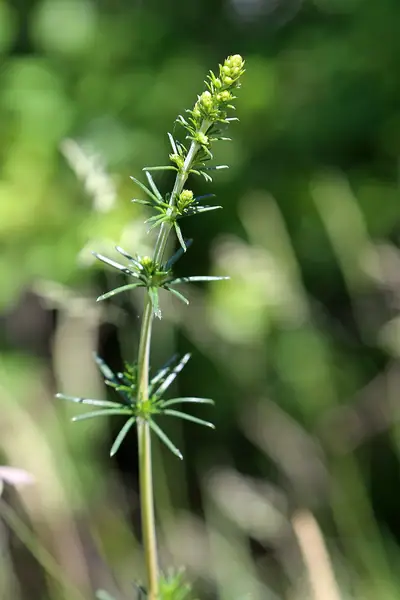
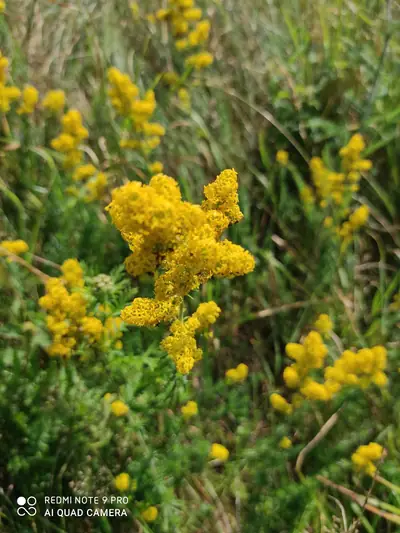


The cloud of small yellow honey-scented flowers that fills meadows and banks in high summer. The name is not poetry: the flowers really do curdle milk, and were cheese rennet across Europe before animal rennet was widely available.
Fields and pasture · Uplands · Roadsides and waste ground · Dunes and sand
Also known asyellow bedstraw, cheese rennet
How to tell it
Very narrow needle-like leaves in whorls of eight to twelve around the stem, dark green above. Thousands of tiny yellow flowers in a dense panicle, sweetly honey-scented from a distance. A four-angled stem.
What it is confused with
Shining bedstraw
Galium lucidum
Flower colour settles it: yellow on lady's bedstraw, white on shining bedstraw. Both with whorled leaves and a four-angled stem.
What it is for
Vegetable rennet for cheese, documented across Europe and still alive in some artisan cheeses. The root gives a red dye and the dried plant scents cupboards, which gave it the English name bedstraw.
With documented traditional uses. Not a therapeutic indication and not a dose.
Where it occurs
Each square is an area with recorded observations of this plant. The lighter background is the set of areas where any of the entries has been observed, and serves as a reference. Note what this is not: it is not where the plant lives, it is where people record it, so trails and towns always look fuller than the mountains. Data from GBIF.
Sources
Community
No approved contributions for this entry yet.
Nothing appears here without a person reading it first. Contributions do not replace the entry or its warnings: until a botanist confirms, what is written above stands.