Chicory
Cichorium intybus
Family · Asteraceae · Harmless
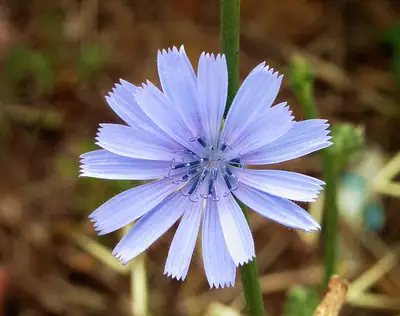
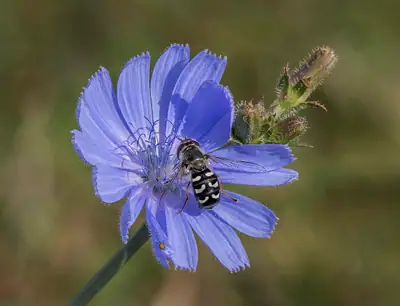


The blue of summer verges, on a stiff, almost leafless stem. The flowers open in the morning and close by midday, which makes the plant invisible to anyone passing in the afternoon.
Roadsides and waste ground · Fields and pasture · Town and roadside
Also known ascommon chicory, blue sailors
How to tell it
Pale blue flowers with toothed petal tips, held against the stem. A stiff, angular stem that looks dead even in high summer. A basal rosette much like a dandelion's.
What it is confused with
Endive
Cichorium endivia
Close relatives and both edible. The wild one is taller, tougher and more bitter. The mistake has no consequence.
What it is for
Young leaves in bitter salad and roasted root as a coffee substitute, a use that spread across Europe in times of scarcity. It is the same species that garden endives descend from.
Traditionally used as food. This is not permission to eat it.
With documented traditional uses. Not a therapeutic indication and not a dose.
Where it occurs
Each square is an area with recorded observations of this plant. The lighter background is the set of areas where any of the entries has been observed, and serves as a reference. Note what this is not: it is not where the plant lives, it is where people record it, so trails and towns always look fuller than the mountains. Data from GBIF.
Sources
Community
No approved contributions for this entry yet.
Nothing appears here without a person reading it first. Contributions do not replace the entry or its warnings: until a botanist confirms, what is written above stands.