Fat hen
Chenopodium album
Family · Amaranthaceae · Harmless
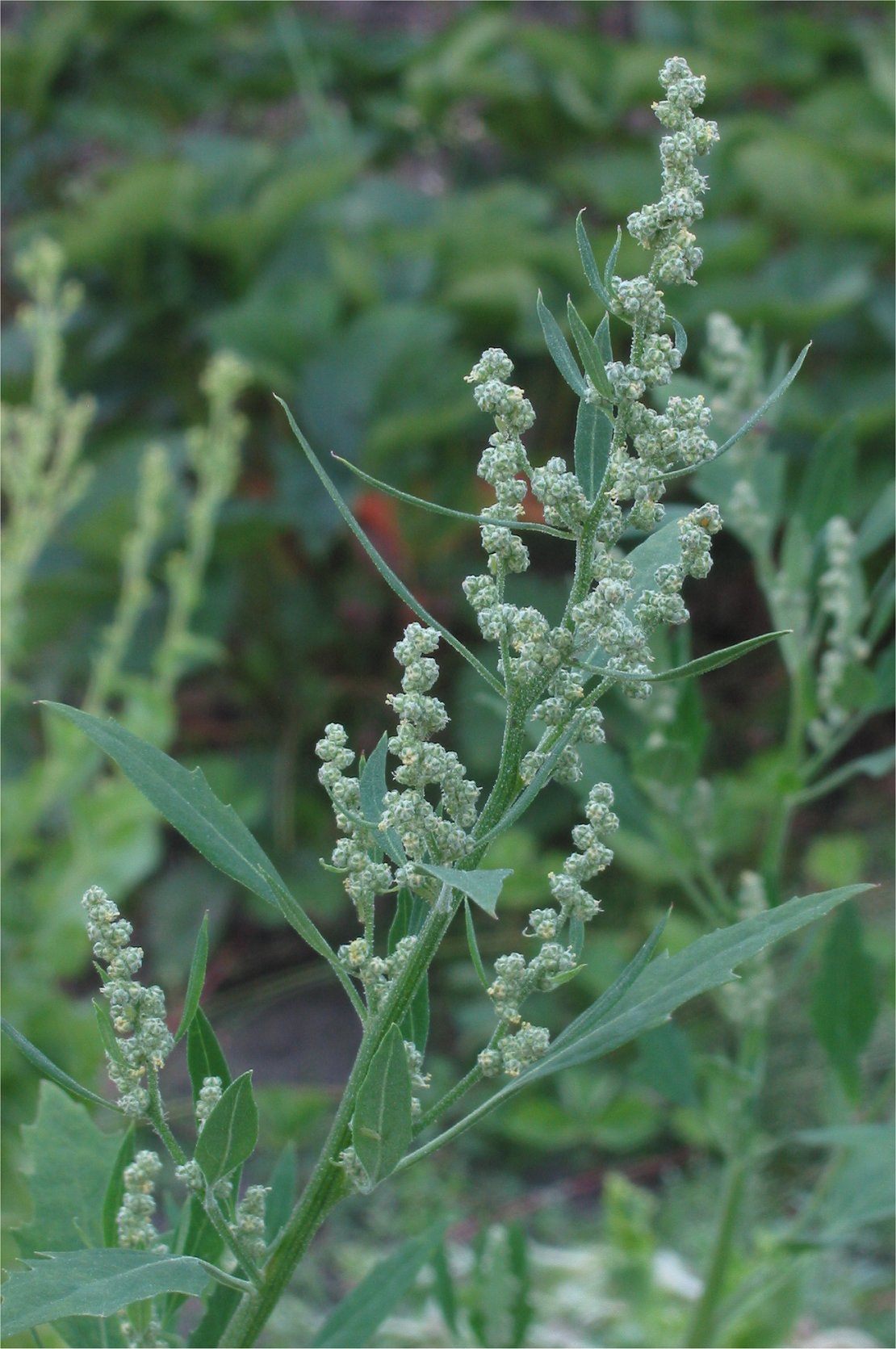


The tall herb with leaves coated in a white mealy dust that fills gardens and rich ground in summer. It was a vegetable in Europe before spinach existed, and it is still grown as a grain in the Andes, where a relative is called quinoa.
Town and roadside · Fields and pasture · Roadsides and waste ground
Also known aslamb's quarters, white goosefoot
How to tell it
Run a finger over a young leaf: white dust comes off, like flour. Diamond-shaped leaves with an irregularly toothed margin, paler beneath. Tiny green flowers in dense clusters, with no petals at all. The stem often has reddish stripes.
What it is confused with
Black nightshade
Solanum nigrum
They grow in the same garden and both are tall and broad-leaved. Fat hen has white dust on the leaf and green petal-less flowers; black nightshade has a clean leaf, a five-pointed white flower and black berries. Black berries are never fat hen.
Open sheet →What it is for
Young leaves cooked like spinach, in soups and stews, across Europe and India. Note: like spinach it is rich in oxalates, so it is cooked and not eaten raw in quantity.
Traditionally used as food. This is not permission to eat it.