Common stork's-bill
Erodium cicutarium
Family · Geraniaceae · Harmless
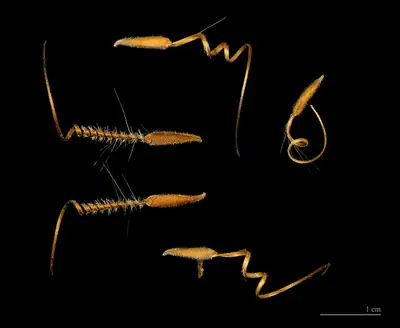
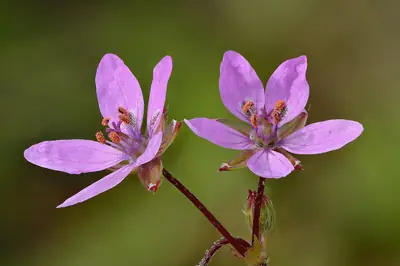


The low herb with small pink flowers whose fruit is a long beak that, on drying, coils like a corkscrew and drills itself into the soil. It is one of the best displays of plant engineering you will see on a trail.
Fields and pasture · Roadsides and waste ground · Town and roadside · Dunes and sand
Also known asredstem filaree, pinweed
How to tell it
Very finely divided, almost feathery leaves in a ground-hugging rosette, resembling an umbellifer's, hence the scientific name. Lilac-pink five-petalled flowers. The stork's-bill fruit, two to four centimetres, is unmistakable.
What it is confused with
Little Robin
Geranium purpureum
Same family and both harmless. Stork's-bill has feathery leaves and a coiling fruit; Little Robin has a palmate open leaf, a strong unpleasant smell, and very red stems.
What it is for
Young leaves eaten cooked or in salad in several regions, mild in flavour. Fodder prized by rabbits and small livestock. Gathered before flowering.
Traditionally used as food. This is not permission to eat it.
Where it occurs
Each square is an area with recorded observations of this plant. The lighter background is the set of areas where any of the entries has been observed, and serves as a reference. Note what this is not: it is not where the plant lives, it is where people record it, so trails and towns always look fuller than the mountains. Data from GBIF.
Sources
Community
No approved contributions for this entry yet.
Nothing appears here without a person reading it first. Contributions do not replace the entry or its warnings: until a botanist confirms, what is written above stands.