Hazel
Corylus avellana
Family · Betulaceae · Harmless
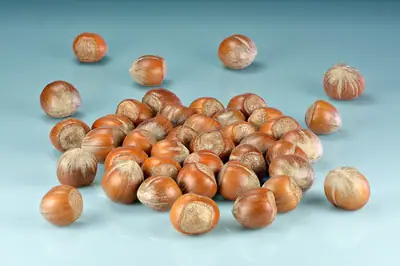
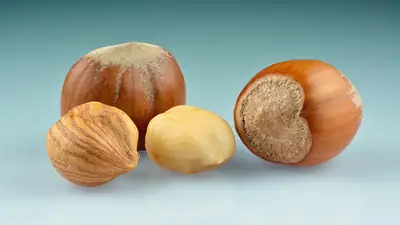


The multi-stemmed shrub that flowers in the middle of January, with yellow catkins hanging when there is not a leaf in the wood. It gives hazelnuts in September, if squirrels and jays leave any.
Streams and ditches · Oak woods · Uplands
Also known ascommon hazel, cobnut
How to tell it
Yellow catkins hanging in winter, unmistakable in a bare wood. An almost round leaf with an abrupt point, doubly toothed and softly hairy. It grows as a stool, many stems from the ground, not a single trunk.
What it is confused with
Common alder
Alnus glutinosa
Same family, same riverbank, both with catkins. Alder's leaf has a bluntly cut tip and is smooth; hazel's ends in an abrupt point and is softly hairy. And alder keeps woody cones in winter, hazel keeps nuts in autumn.
What it is for
The hazelnut, gathered in September when the husk turns brown. The straight rods were raw material for baskets, woven hedges and withies, which is why many old hazels have the shape of a coppice stool.
Traditionally used as food. This is not permission to eat it.
Where it occurs
Each square is an area with recorded observations of this plant. The lighter background is the set of areas where any of the entries has been observed, and serves as a reference. Note what this is not: it is not where the plant lives, it is where people record it, so trails and towns always look fuller than the mountains. Data from GBIF.
Sources
Community
No approved contributions for this entry yet.
Nothing appears here without a person reading it first. Contributions do not replace the entry or its warnings: until a botanist confirms, what is written above stands.