Common dog violet
Viola riviniana
Family · Violaceae · Harmless
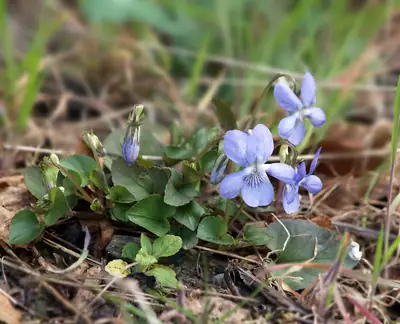
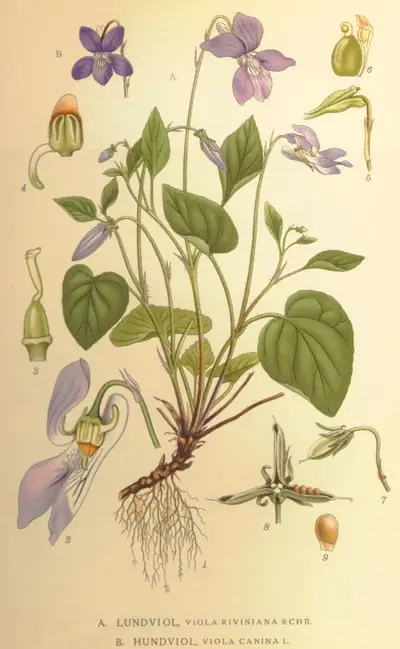


The small purple violet that appears on shady northern banks at winter's end. Unlike the scented violet, this one barely smells, and that is what distinguishes it.
Oak woods · Uplands · Roadsides and waste ground · Streams and ditches
Also known asdog violet, wood violet
How to tell it
Heart-shaped long-stalked leaves in a rosette. A blue-purple five-petalled flower with a short pale spur behind, almost white. No noticeable scent.
What it is confused with
Sweet violet
Viola odorata
The nose decides: sweet violet is fragrant, dog violet is not. Both edible, so the mistake is only about scent.
What it is for
The flowers are eaten crystallised or in salad, an old confectionery tradition. The leaves in quantity do not sit well, so it is a plant for decorating a plate, not for a meal.
Traditionally used as food. This is not permission to eat it.
Where it occurs
Each square is an area with recorded observations of this plant. The lighter background is the set of areas where any of the entries has been observed, and serves as a reference. Note what this is not: it is not where the plant lives, it is where people record it, so trails and towns always look fuller than the mountains. Data from GBIF.
Sources
Community
No approved contributions for this entry yet.
Nothing appears here without a person reading it first. Contributions do not replace the entry or its warnings: until a botanist confirms, what is written above stands.