Round-headed leek
Allium sphaerocephalon
Family · Amaryllidaceae · Irritating
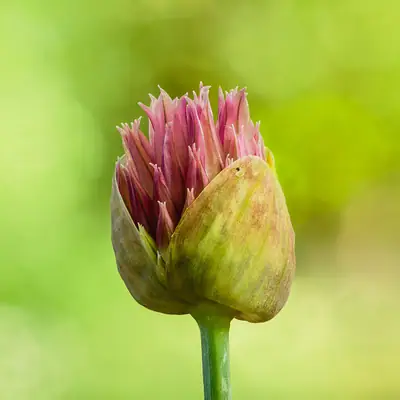
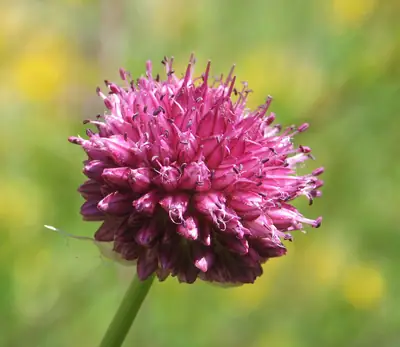


The wild garlic that makes a dense dark purple ball atop a bare stem, at the height of summer. It is seen from afar on dry slopes and smells strongly of garlic when crushed.
Scrubland · Fields and pasture · Roadsides and waste ground · Uplands
Also known asdrumstick allium, ball-head onion
How to tell it
A compact ovoid head two to three centimetres across, with dozens of tightly packed dark purple or reddish pink flowers. No bulbils among the flowers, unlike several other wild alliums. Cylindrical hollow leaves, mostly already dry at flowering. A strong garlic smell when any part is crushed.
What it is confused with
Grape hyacinth
Muscari neglectum
Leaves and bulb are alike and grow side by side. The allium smells of garlic, the grape hyacinth smells of nothing and is toxic. And the hyacinth's flowers are closed beads with a white mouth, the allium's are open and starry.
What it is for
Bulb and leaves were traditionally used as seasoning, weaker than garden garlic. The garlic smell guarantees the genus, but does not replace certainty: there are toxic bulbs with similar scentless leaves, and it is the smell that decides, not the look.
Traditionally used as food. This is not permission to eat it.
Where it occurs
Each square is an area with recorded observations of this plant. The lighter background is the set of areas where any of the entries has been observed, and serves as a reference. Note what this is not: it is not where the plant lives, it is where people record it, so trails and towns always look fuller than the mountains. Data from GBIF.
Sources
Community
No approved contributions for this entry yet.
Nothing appears here without a person reading it first. Contributions do not replace the entry or its warnings: until a botanist confirms, what is written above stands.