Common chickweed
Stellaria media
Family · Caryophyllaceae · Harmless
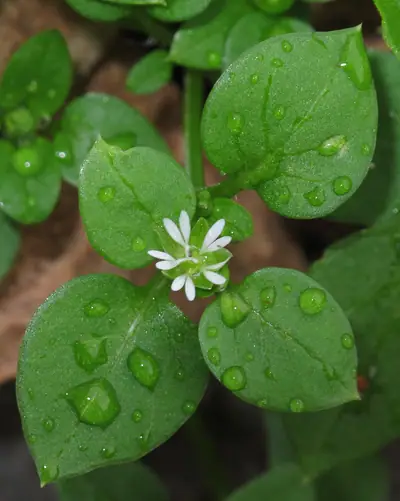
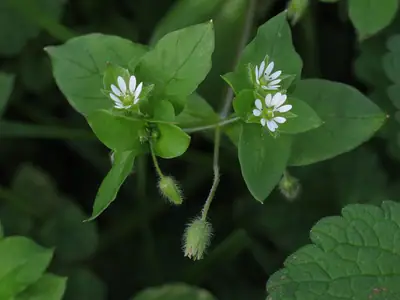


The pale green carpet that fills beds, gardens and pots in winter, when almost nothing else grows. It is among the best wild plants to eat raw, tasting of tender corn, and one of the easiest to recognise once you know the trick.
Town and roadside · Fields and pasture · Roadsides and waste ground · Oak woods
Also known aschickweed, starweed
How to tell it
The trick is this: the stem carries a single line of hairs running from one node to the next, switching sides at each node. No other plant does this. Opposite, oval, pale green leaves. Tiny white flowers with five petals so deeply split they look like ten.
What it is confused with
Scarlet pimpernel
Lysimachia arvensis
This is the confusion that matters, because they grow side by side and one is eaten and the other is not. Look for the line of hairs on the stem: chickweed has it, pimpernel does not, and pimpernel has a smooth four-angled stem and brick-red or blue flowers, never white.
What it is for
Eaten raw in salad and cooked, and it is classic food for cage birds and hens, which gave it its common names. Gathered all year, and one of the few plants you pick leaves from in January.
Traditionally used as food. This is not permission to eat it.
With documented traditional uses. Not a therapeutic indication and not a dose.
Where it occurs
Each square is an area with recorded observations of this plant. The lighter background is the set of areas where any of the entries has been observed, and serves as a reference. Note what this is not: it is not where the plant lives, it is where people record it, so trails and towns always look fuller than the mountains. Data from GBIF.
Sources
Community
No approved contributions for this entry yet.
Nothing appears here without a person reading it first. Contributions do not replace the entry or its warnings: until a botanist confirms, what is written above stands.