Daisy
Bellis perennis
Family · Asteraceae · Harmless
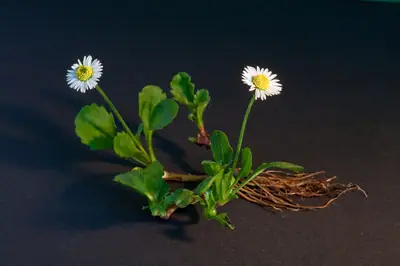
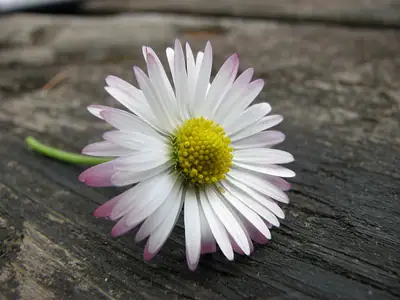


The flower everyone pulls petals from, flowering on any lawn in the country in any month of the year. It closes at night and opens with the sun, which gave it its English name.
Fields and pasture · Town and roadside · Uplands · Roadsides and waste ground
Also known ascommon daisy, lawn daisy
How to tell it
A rosette of spoon-shaped leaves flat on the ground, and one flower per leafless stalk. White petals with a pink reverse and a yellow centre. Always low.
What it is confused with
Oxeye daisy
Leucanthemum vulgare
Oxeye daisy is much bigger with a leafy stem; the common daisy is low with a bare stalk. Both harmless.
What it is for
Young leaves and buds are eaten in salad, nutty with a bitter edge. A traditional external use on bruises, which gave it the English name bruisewort.
Traditionally used as food. This is not permission to eat it.
With documented traditional uses. Not a therapeutic indication and not a dose.
Where it occurs
Each square is an area with recorded observations of this plant. The lighter background is the set of areas where any of the entries has been observed, and serves as a reference. Note what this is not: it is not where the plant lives, it is where people record it, so trails and towns always look fuller than the mountains. Data from GBIF.
Sources
Community
No approved contributions for this entry yet.
Nothing appears here without a person reading it first. Contributions do not replace the entry or its warnings: until a botanist confirms, what is written above stands.