Holly
Ilex aquifolium
Family · Aquifoliaceae · Poisonous
Read this before the sheet
This plant, or one that resembles it, is dangerous. Identifying is not authorising: no app has the authority to tell you that you may eat or touch a plant.
Emergency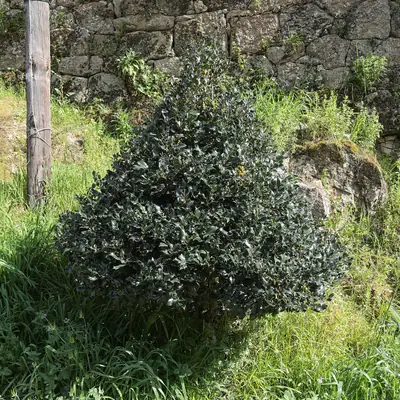
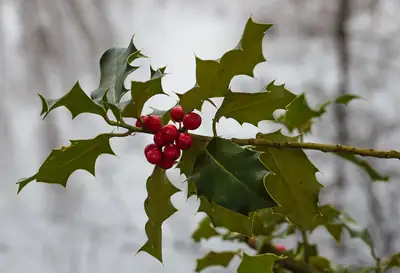


The spiny-leaved, red-berried tree everyone associates with Christmas, and exactly why it has been legally protected in Portugal since 1942. Cutting a branch to decorate is illegal, and it was that harvest that made it rare.
Uplands · Oak woods
Also known asEnglish holly, Christmas holly
How to tell it
A leathery, very glossy, wavy leaf armed with spines at the tips, especially on low branches: higher up, out of reach of livestock, the same tree makes almost smooth leaves. Red berries on female trees, in winter.
What it is confused with
Butcher's broom
Ruscus aculeatus
Both spiny, red-berried, protected, and both gathered for Christmas. Holly is a tree with true leaves; butcher's broom is a low plant whose false leaves bear the flower and berry in the middle.
What it is for
None to encourage
The berries are toxic and cause vomiting and severe diarrhoea, especially in children, which is what makes them dangerous indoors in December. The hard white wood was used in inlay work.
The law says
Protected in Portugal by its own decree: cutting, uprooting or selling branches is forbidden, even on private land, without authorisation. Enforcement is active in December.
Where it occurs
Each square is an area with recorded observations of this plant. The lighter background is the set of areas where any of the entries has been observed, and serves as a reference. Note what this is not: it is not where the plant lives, it is where people record it, so trails and towns always look fuller than the mountains. Data from GBIF.
Sources
Community
No approved contributions for this entry yet.
Nothing appears here without a person reading it first. Contributions do not replace the entry or its warnings: until a botanist confirms, what is written above stands.