Red clover
Trifolium pratense
Family · Fabaceae · Harmless
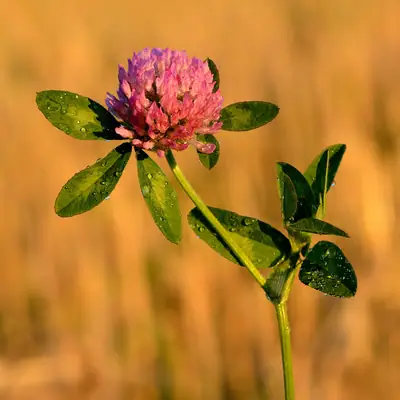
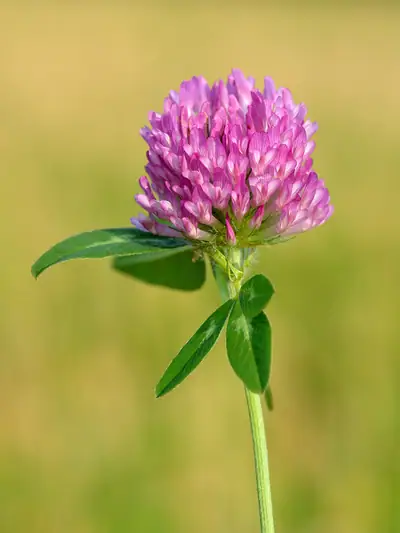


The big clover with purplish pink heads of wet meadows and upland pastures. More upright than white clover, and the most sown forage plant of temperate Europe.
Fields and pasture · Uplands · Roadsides and waste ground
Also known asmeadow clover, purple clover
How to tell it
Three leaflets with a pale crescent mark, on upright hairy stems. A large purplish pink flower head, cradled by two leaves clasping it from below.
What it is confused with
White clover
Trifolium repens
Colour and habit: white clover creeps with a white head, red clover stands up with a pink head. Both harmless.
What it is for
Fodder and green manure, and the flowers are used in infusions. Sucking the nectar from the base of each floret is a childhood game across half of Europe.
Traditionally used as food. This is not permission to eat it.
With documented traditional uses. Not a therapeutic indication and not a dose.
Where it occurs
Each square is an area with recorded observations of this plant. The lighter background is the set of areas where any of the entries has been observed, and serves as a reference. Note what this is not: it is not where the plant lives, it is where people record it, so trails and towns always look fuller than the mountains. Data from GBIF.
Sources
Community
No approved contributions for this entry yet.
Nothing appears here without a person reading it first. Contributions do not replace the entry or its warnings: until a botanist confirms, what is written above stands.