French lavender
Lavandula stoechas
Family · Lamiaceae · Harmless
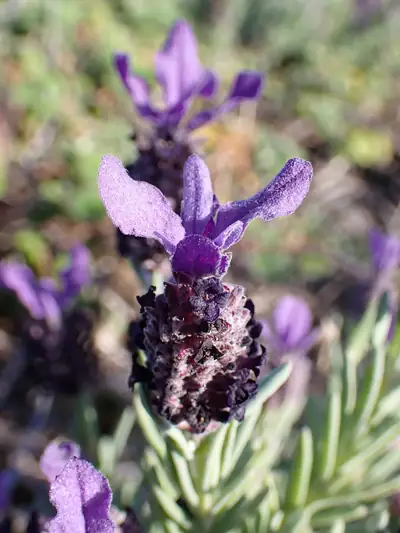
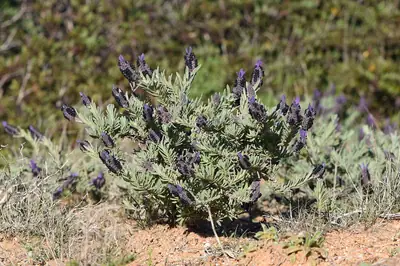


The purple that covers Portuguese scrubland in spring. Recognised by the two ear-like petals standing at the top of the flower spike, which no other Iberian lavender wears so plainly.
Scrubland · Pine woods · Uplands
Also known astopped lavender, Spanish lavender
How to tell it
A short, compact spike topped by two purple bracts like ears. A strong camphor smell, harsher than garden lavender. Acid soils, and one of the first plants back after a fire.
What it is confused with
Rosemary
Salvia rosmarinus
A confusion of names, not shapes. In Portugal rosmaninho is this lavender and alecrim is the needle-leaved shrub. In Brazil the names swap over, which is where the mix-up comes from.
What it is for
Traditionally used in infusions and to scent linen and houses. It is also one of the country's best nectar plants: rosmaninho honey is a product in its own right.
With documented traditional uses. Not a therapeutic indication and not a dose.
Where it occurs
Each square is an area with recorded observations of this plant. The lighter background is the set of areas where any of the entries has been observed, and serves as a reference. Note what this is not: it is not where the plant lives, it is where people record it, so trails and towns always look fuller than the mountains. Data from GBIF.
Sources
Community
No approved contributions for this entry yet.
Nothing appears here without a person reading it first. Contributions do not replace the entry or its warnings: until a botanist confirms, what is written above stands.