Dwarf fan palm
Chamaerops humilis
Family · Arecaceae · Irritating
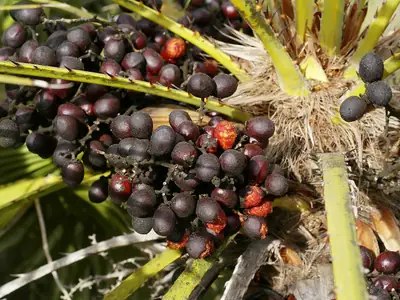
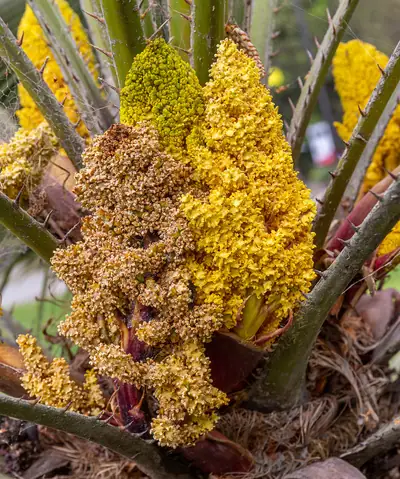


The only palm native to continental Europe, and a surprise to anyone meeting it for the first time in Algarve or Andalusian scrub. It grows as a low spiny clump, rarely with a trunk.
Scrubland · Dunes and sand · Uplands
Also known asEuropean fan palm, Mediterranean dwarf palm
How to tell it
Rigid fan leaves split into pointed segments, on stalks armed with strong upward-pointing spines. It grows in a clump from the ground, almost always with no visible trunk. Oval orange-brown fruits.
What it is confused with
Canary palm
Phoenix canariensis
The Canary palm is a planted tree with a tall trunk and feather leaves; ours is a low clump from the ground with fan leaves. Neither is confusable up close.
What it is for
The tender central shoot, the heart, was traditionally eaten, and the leaves made brooms, ropes, baskets and mats across the south. Note: taking the heart kills the stem, which is why the harvest is no longer acceptable.
Traditionally used as food. This is not permission to eat it.
The law says
A protected species in Portugal and in several Spanish regions, present in classified habitats. Do not uproot, transplant, or take the heart.
Where it occurs
Each square is an area with recorded observations of this plant. The lighter background is the set of areas where any of the entries has been observed, and serves as a reference. Note what this is not: it is not where the plant lives, it is where people record it, so trails and towns always look fuller than the mountains. Data from GBIF.
Sources
Community
No approved contributions for this entry yet.
Nothing appears here without a person reading it first. Contributions do not replace the entry or its warnings: until a botanist confirms, what is written above stands.