Prickly juniper
Juniperus oxycedrus
Family · Cupressaceae · Irritating

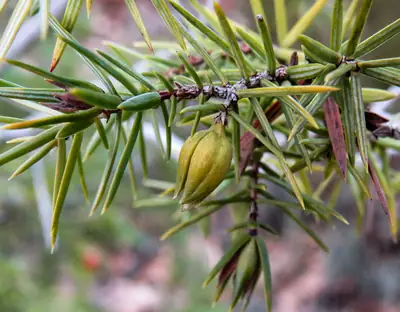


The southern juniper, genuinely prickly, with orange berries instead of blue. It is the source of cade oil, used for centuries in veterinary medicine and tar soaps.
Scrubland · Uplands · Montado · Dunes and sand
Also known ascade juniper, sharp cedar
How to tell it
Needles in threes, stiff and very sharp, with two white stripes on the upper face. That is the difference that matters: common juniper has one. Reddish-orange berries when ripe.
What it is confused with
Common juniper
Juniperus communis
Count the white stripes on the needle: one is common juniper, two is prickly juniper. Only the blue berries of the common one flavour gin and food; the orange ones do not have that use.
What it is for
Cade oil, distilled from the wood, is a raw material for soaps and dermatological preparations. A note that stays on the sheet: this juniper's berries are not used like common juniper's, and burning the wood in an enclosed space releases irritant smoke.
Where it occurs
Each square is an area with recorded observations of this plant. The lighter background is the set of areas where any of the entries has been observed, and serves as a reference. Note what this is not: it is not where the plant lives, it is where people record it, so trails and towns always look fuller than the mountains. Data from GBIF.
Sources
Community
No approved contributions for this entry yet.
Nothing appears here without a person reading it first. Contributions do not replace the entry or its warnings: until a botanist confirms, what is written above stands.