Sticky mouse-ear
Cerastium glomeratum
Family · Caryophyllaceae · Harmless
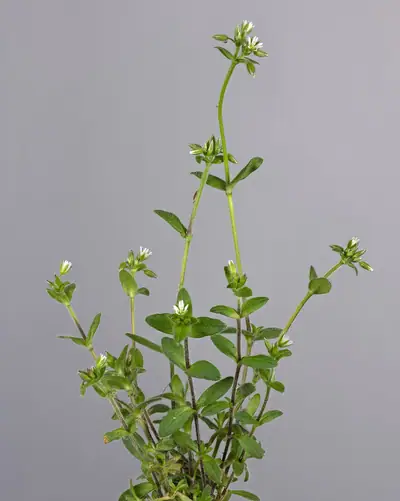
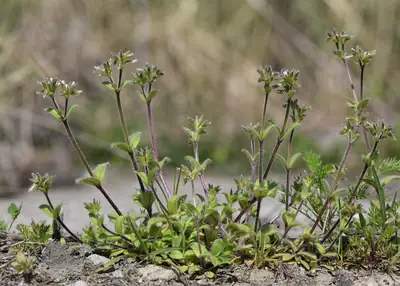


The small sticky herb with tiny white flowers that grows in beds, lawns and pavement joints in winter, often beside chickweed. You tell it by touch before you tell it by sight.
Town and roadside · Fields and pasture · Roadsides and waste ground
Also known asclustered mouse-ear chickweed
How to tell it
The whole plant is covered in glandular hairs and is clearly sticky: it clings to fingers and clothes. Opposite, oval, hairy leaves, like small ears. White flowers with five notched petals, grouped in a tight cluster at the top.
What it is confused with
Common chickweed
Stellaria media
Run a finger over it: mouse-ear is sticky and hairy all over; chickweed is smooth, with a single line of hairs that switches sides at each node. Neither is dangerous, but only one is worth eating.
What it is for
No relevant use
It is here because it grows right beside chickweed, which is eaten, and it is worth knowing that this one is hairy and sticky and the other is smooth with a single line of hairs.
Where it occurs
Each square is an area with recorded observations of this plant. The lighter background is the set of areas where any of the entries has been observed, and serves as a reference. Note what this is not: it is not where the plant lives, it is where people record it, so trails and towns always look fuller than the mountains. Data from GBIF.
Sources
Community
No approved contributions for this entry yet.
Nothing appears here without a person reading it first. Contributions do not replace the entry or its warnings: until a botanist confirms, what is written above stands.