Oleander
Nerium oleander
Family · Apocynaceae · Can kill
Read this before the sheet
This plant, or one that resembles it, is dangerous. Identifying is not authorising: no app has the authority to tell you that you may eat or touch a plant.
Emergency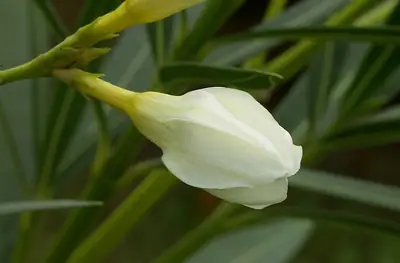


It is planted in half the country's central reservations and grows wild in southern riverbeds. One of the most toxic plants you will meet in a Portuguese town, and nobody suspects it.
Streams and ditches · Town and roadside · Roadsides and waste ground
Also known asrose bay, oleander
How to tell it
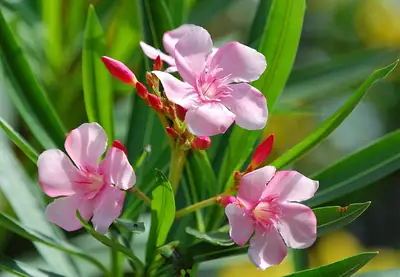
Long leathery leaves in whorls of three around the stem, with a strong central vein. Pink, white or red flowers through most of the summer. A broken twig bleeds milky latex.
What it is confused with
Olive tree
Olea europaea
Out of flower the leaves are confusable. Olive has a shorter leaf, silvery beneath and in opposite pairs; oleander has a larger leaf, green on both sides and in threes.
What it is for
None
Not for roasting, not as a skewer, not for smoke: burning it releases toxic compounds and a branch used as a skewer has caused poisonings.
Where it occurs
Each square is an area with recorded observations of this plant. The lighter background is the set of areas where any of the entries has been observed, and serves as a reference. Note what this is not: it is not where the plant lives, it is where people record it, so trails and towns always look fuller than the mountains. Data from GBIF.
Sources
Community
No approved contributions for this entry yet.
Nothing appears here without a person reading it first. Contributions do not replace the entry or its warnings: until a botanist confirms, what is written above stands.