Water figwort
Scrophularia auriculata
Family · Scrophulariaceae · Poisonous
Read this before the sheet
This plant, or one that resembles it, is dangerous. Identifying is not authorising: no app has the authority to tell you that you may eat or touch a plant.
Emergency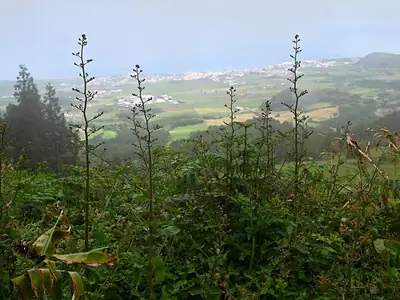


The tall riverbank plant with a four-angled winged stem and minute reddish brown jar-shaped flowers that smell bad and attract wasps.
Streams and ditches · Fields and pasture
Also known aswater betony
How to tell it
An upright sturdy stem, four-angled with a membranous wing on each ridge, felt at once between the fingers and separating it from the mint family. Opposite, oval, toothed leaves, often with a pair of small lobes at the base, like two ears. Flowers five to ten millimetres, reddish brown and globular, in a loose panicle.
What it is confused with
No dangerous lookalikes known in the Iberian Peninsula.
What it is for
Traditional external medicinal use, and the name comes from scrofula, the swollen glands it was used on. It is not taken internally: it contains cardioactive glycosides and is toxic that way. It is a warning about the mint family rule: a four-angled stem does not mean something can be tasted.
With documented traditional uses. Not a therapeutic indication and not a dose.
Where it occurs
Each square is an area with recorded observations of this plant. The lighter background is the set of areas where any of the entries has been observed, and serves as a reference. Note what this is not: it is not where the plant lives, it is where people record it, so trails and towns always look fuller than the mountains. Data from GBIF.
Sources
Community
No approved contributions for this entry yet.
Nothing appears here without a person reading it first. Contributions do not replace the entry or its warnings: until a botanist confirms, what is written above stands.