Wood sage
Teucrium scorodonia
Family · Lamiaceae · Irritating
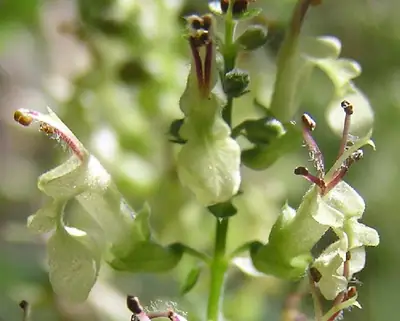
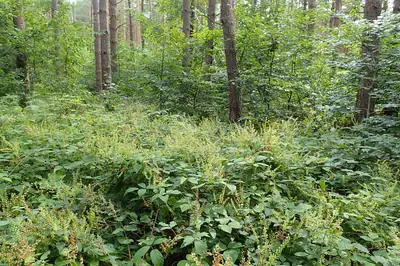


The mint with sage-wrinkled leaves and spikes of yellow-green flowers that grows in oak shade and acid banks in the north. Rubbed, it smells faintly of garlic, which explains the name.
Oak woods · Uplands · Scrubland · Walls and rocks
Also known aswoodland germander, sage-leaved germander
How to tell it
Heart-shaped leaves, deeply wrinkled with round teeth, opposite, dull green. Pale yellow-green flowers in one-sided lateral spikes, with no upper lip, as in all germanders.
What it is confused with
Wall germander
Teucrium chamaedrys
Wall germander is low, with a small glossy leaf and pink flowers, on limestone; wood sage is tall, with a large dull leaf and yellow-green flowers, on acid soil in shade.
What it is for
A traditional bittering agent in craft beer before hops, and a folk medicine plant. Like the other germanders, it has compounds linked to liver injury with prolonged use: not a plant for daily infusion.
With documented traditional uses. Not a therapeutic indication and not a dose.
Where it occurs
Each square is an area with recorded observations of this plant. The lighter background is the set of areas where any of the entries has been observed, and serves as a reference. Note what this is not: it is not where the plant lives, it is where people record it, so trails and towns always look fuller than the mountains. Data from GBIF.
Sources
Community
No approved contributions for this entry yet.
Nothing appears here without a person reading it first. Contributions do not replace the entry or its warnings: until a botanist confirms, what is written above stands.