Common catchfly
Silene gallica
Family · Caryophyllaceae · Harmless
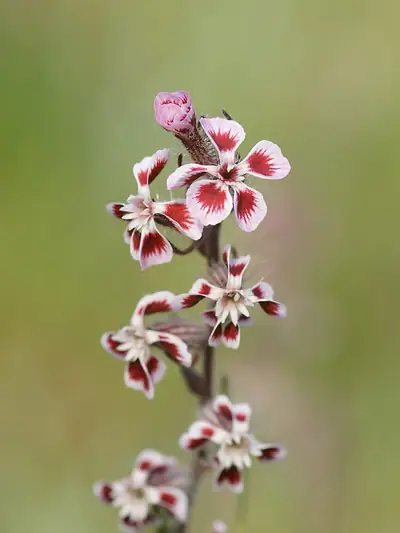
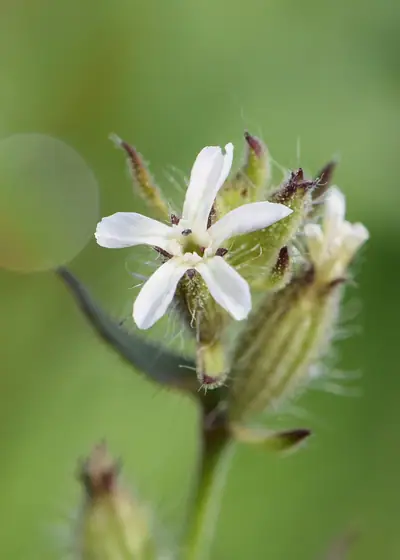


The small sticky catchfly of cornfields and sandy ground, with white or pink flowers on one side of the stem, often with a dark red blotch in the centre of each petal. It glues small insects to the stem, hence the English name.
Fields and pasture · Roadsides and waste ground · Dunes and sand · Pine woods
Also known assmall-flowered catchfly, windmill pink
How to tell it
A stem covered in very sticky glandular hairs, with darker viscid rings between the nodes. Small flowers lined up on one side, with five petals often bearing a carmine blotch. A hairy calyx with ten marked veins.
What it is confused with
Bladder campion
Silene vulgaris
The calyx decides: inflated into a smooth bluish balloon on bladder campion, which is eaten, and narrow, hairy and sticky here, which is not worth it.
What it is for
No food use, unlike its larger cousin. The stem's stickiness is a defence against ants climbing up to steal nectar without pollinating.
Where it occurs
Each square is an area with recorded observations of this plant. The lighter background is the set of areas where any of the entries has been observed, and serves as a reference. Note what this is not: it is not where the plant lives, it is where people record it, so trails and towns always look fuller than the mountains. Data from GBIF.
Sources
Community
No approved contributions for this entry yet.
Nothing appears here without a person reading it first. Contributions do not replace the entry or its warnings: until a botanist confirms, what is written above stands.