Common reed
Phragmites australis
Family · Poaceae · Harmless
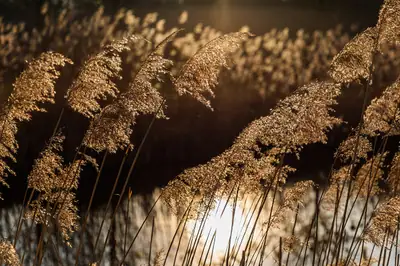
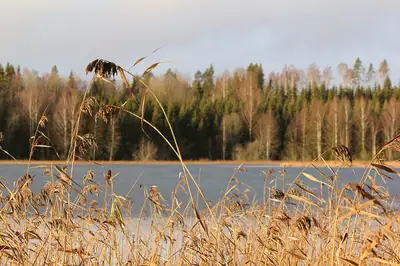


The reedbed that covers river margins, ditches and marshes, with stems two to four metres tall and silky panicles that stay silver all winter. Where it grows, water is close by, and that is the information it gives a walker.
Streams and ditches · Fields and pasture · Dunes and sand
Also known asreed, phragmites
How to tell it
A slender, straight, hollow stem two to four metres tall, with flat leaves two to five centimetres wide that spread sideways and swivel in the wind. The panicle is large, soft and nodding, purple brown in August and silvery later, and stays dry until the following spring. It forms continuous stands, all of one height, because it spreads by rhizomes.
What it is confused with
Giant reed
Arundo donax
Giant reed is thicker, with a finger-wide woody cane, and its leaves clasp it in two ranks like flags. Common reed is pencil-thin and its panicle is soft and nodding. Giant reed is invasive, common reed is native.
Open sheet →What it is for
It thatched roofs, made mats, baskets and wattle partitions, and bedded livestock. Today it is planted on purpose in reed beds to treat waste water, because the roots filter. None of this is a food use.
Where it occurs
Each square is an area with recorded observations of this plant. The lighter background is the set of areas where any of the entries has been observed, and serves as a reference. Note what this is not: it is not where the plant lives, it is where people record it, so trails and towns always look fuller than the mountains. Data from GBIF.