Creeping buttercup
Ranunculus repens
Family · Ranunculaceae · Poisonous
Read this before the sheet
This plant, or one that resembles it, is dangerous. Identifying is not authorising: no app has the authority to tell you that you may eat or touch a plant.
Emergency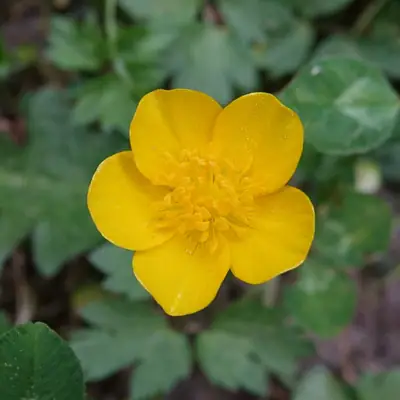
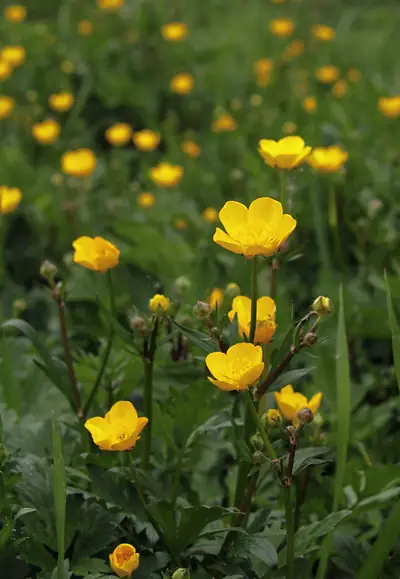


The glossy yellow flower that fills damp meadows and waterlogged lawns in spring, its petals looking varnished. Everyone knows it by sight, and almost nobody knows the fresh sap raises blisters.
Fields and pasture · Streams and ditches · Town and roadside · Uplands
Also known ascreeping crowfoot, sitfast
How to tell it
Yellow five-petalled flowers with a varnished shine, which is a layer of mirror cells beneath the pigment. Leaves divided into three stalked leaflets, the middle one on a longer stalk. Long runners along the ground rooting at the nodes, which separates it from the other buttercups.
What it is confused with
Creeping cinquefoil
Potentilla reptans
They grow side by side in the same damp lawn, both creep by runners and both have five-petalled yellow flowers. Count the leaflets: five on cinquefoil, three on buttercup. And only the buttercup has the varnished petal shine and the sap that burns.
What it is for
None
Like all buttercup relatives it contains protoanemonin: the fresh sap irritates skin and mucous membranes and can raise blisters, and swallowed it causes severe inflammation of the mouth. Livestock avoid it in the meadow, which is why it is left standing in grazed pasture.
Where it occurs
Each square is an area with recorded observations of this plant. The lighter background is the set of areas where any of the entries has been observed, and serves as a reference. Note what this is not: it is not where the plant lives, it is where people record it, so trails and towns always look fuller than the mountains. Data from GBIF.
Sources
Community
No approved contributions for this entry yet.
Nothing appears here without a person reading it first. Contributions do not replace the entry or its warnings: until a botanist confirms, what is written above stands.