Annual saltmarsh aster
Symphyotrichum squamatum
Family · Asteraceae · Harmless
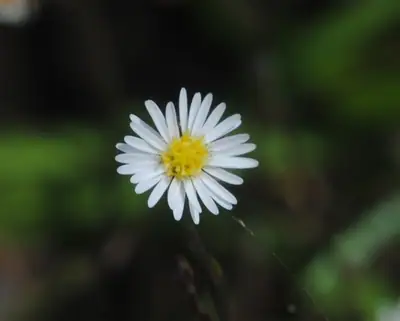
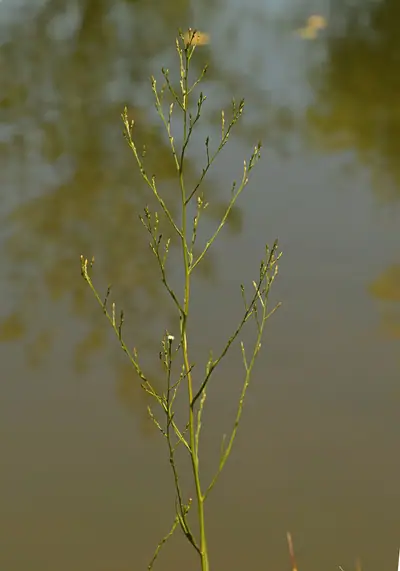


The tall lean plant that fills ditches and pavement joints in autumn, with dozens of small heads whose pale lilac rays are almost invisible. It came from America and is now everywhere.
Town and roadside · Roadsides and waste ground · Streams and ditches · Fields and pasture
Also known assouthern annual saltmarsh aster
How to tell it
An upright, little branched stem to a metre and a half, with narrow alternate leaves. Narrow cylindrical heads, with green bracts in several rows and a crown of very short pale lilac rays barely protruding. Fruits with a white hair plume.
What it is confused with
Flax-leaf fleabane
Erigeron bonariensis
They grow in the same places and look alike from afar. The aster has visible lilac rays, however short; fleabane has none at all and its heads stay closed until they burst into a white plume.
What it is for
No use
It tolerates salt and polluted water better than almost anything, which is why it dominates road ditches and urban stream beds.
Where it occurs
Each square is an area with recorded observations of this plant. The lighter background is the set of areas where any of the entries has been observed, and serves as a reference. Note what this is not: it is not where the plant lives, it is where people record it, so trails and towns always look fuller than the mountains. Data from GBIF.
Sources
Community
No approved contributions for this entry yet.
Nothing appears here without a person reading it first. Contributions do not replace the entry or its warnings: until a botanist confirms, what is written above stands.