Sumatran fleabane
Conyza sumatrensis
Family · Asteraceae · Harmless
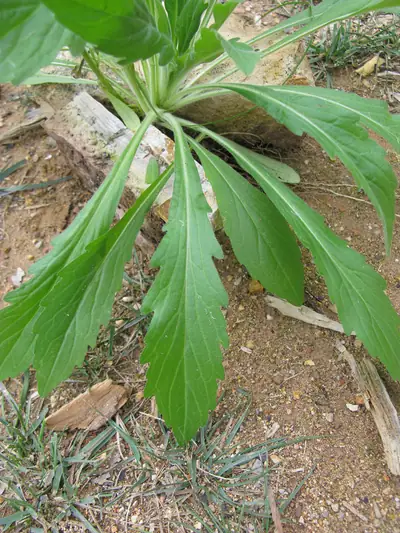
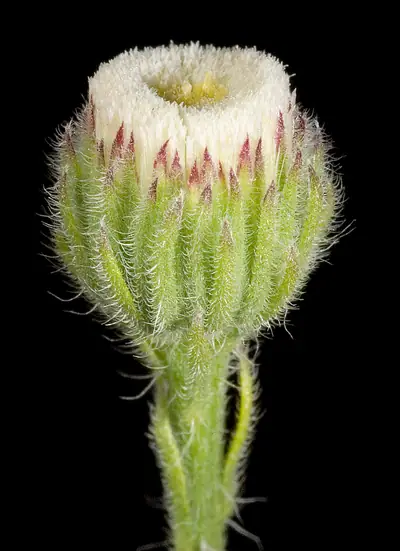


The tall grey rod that grows in any pavement crack, building site or verge, that nobody plants and nobody wants. It came from the Americas and is today among the most abundant plants in Iberian cities.
Town and roadside · Roadsides and waste ground · Fields and pasture
Also known astall fleabane, guernsey fleabane
How to tell it
A single upright stem passing a metre and a half, greyish green and covered in rough hairs. Narrow alternate leaves all along the stem. Hundreds of tiny whitish heads in an elongated panicle at the top.
What it is confused with
No dangerous lookalikes known in the Iberian Peninsula.
What it is for
None
It is herbicide-resistant and produces tens of thousands of wind-borne seeds per plant, which explains why it is everywhere.
The law says
An invasive alien species in Portugal. Do not propagate it, and remove it before it sets seed.
Where it occurs
Each square is an area with recorded observations of this plant. The lighter background is the set of areas where any of the entries has been observed, and serves as a reference. Note what this is not: it is not where the plant lives, it is where people record it, so trails and towns always look fuller than the mountains. Data from GBIF.
Sources
Community
No approved contributions for this entry yet.
Nothing appears here without a person reading it first. Contributions do not replace the entry or its warnings: until a botanist confirms, what is written above stands.