Bilberry
Vaccinium myrtillus
Family · Ericaceae · Irritating
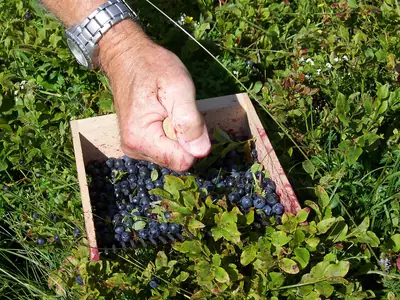
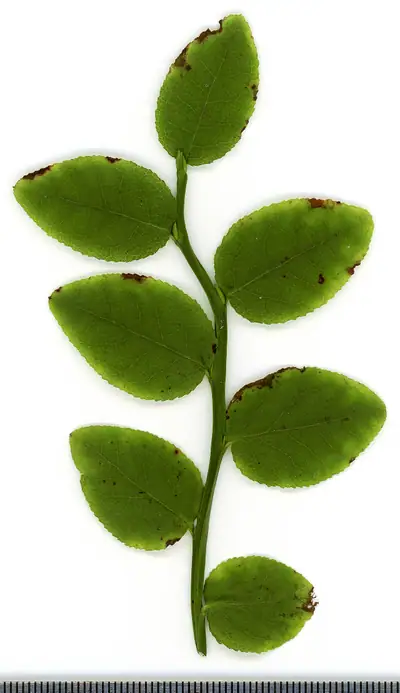


The low shrub of the high northern sierras bearing the most sought-after dark blue berries in the Iberian mountains. In Gerês, Estrela and the Picos, gathering bilberries in August is a ritual with a fixed date.
Uplands · Oak woods
Also known asblaeberry, whortleberry
How to tell it
A shrub twenty to fifty centimetres tall, with green angular-sectioned stems, which is rare and very characteristic. Small oval finely toothed leaves, deciduous. Dark blue berries with a waxy bloom and a crown at the top.
What it is confused with
Bearberry
Arctostaphylos uva-ursi
They share the sierra and the family. Bearberry is prostrate, with a leathery evergreen leaf and a dry red berry; bilberry is upright, with a thin deciduous leaf and a juicy dark blue berry.
What it is for
The berries are eaten raw, in jam and in liqueur, and stain the mouth purple. The leaves were a traditional infusion. Pick by hand, not with a comb: harvesting combs tear off leaves and flowers and compromise the next year's crop. The leaves are not the fruit: they contain arbutin, which the body turns into hydroquinone, and prolonged use of them is considered unsafe.
Traditionally used as food. This is not permission to eat it.
With documented traditional uses. Not a therapeutic indication and not a dose.
The law says
Harvesting is regulated in several natural parks, with quantity limits and a ban on combs. Check the park's rules before picking.
Where it occurs
Each square is an area with recorded observations of this plant. The lighter background is the set of areas where any of the entries has been observed, and serves as a reference. Note what this is not: it is not where the plant lives, it is where people record it, so trails and towns always look fuller than the mountains. Data from GBIF.
Sources
Community
No approved contributions for this entry yet.
Nothing appears here without a person reading it first. Contributions do not replace the entry or its warnings: until a botanist confirms, what is written above stands.