Annual mercury
Mercurialis annua
Family · Euphorbiaceae · Poisonous
Read this before the sheet
This plant, or one that resembles it, is dangerous. Identifying is not authorising: no app has the authority to tell you that you may eat or touch a plant.
Emergency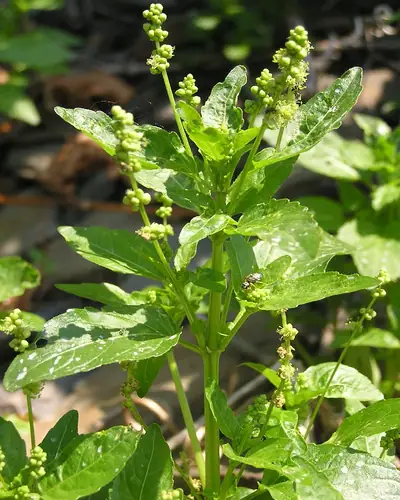


The garden and pot weed everyone pulls without thinking, passing for a harmless nettle because it does not sting. It is toxic, and it is one of the few spurges that does not bleed latex, which removes the family's usual warning.
Town and roadside · Fields and pasture · Roadsides and waste ground
Also known asFrench mercury, boys-and-girls
How to tell it
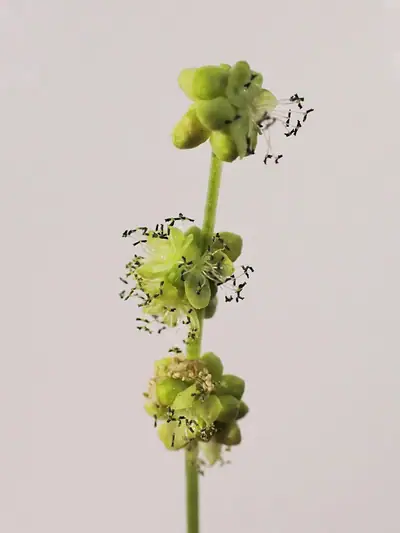
A green, tender stem branching crosswise, with opposite, oval, toothed leaves and no stinging hairs. The flowers are green and insignificant, and male and female are separate plants: some carry upright spikes, others small balls in the leaf axils.
What it is confused with
Stinging nettle
Urtica dioica
Run a careful hand over it: nettle stings, this does not. But the difference that matters is another, because one is cooked and the other is not: nettle has a heart-shaped leaf covered in stiff hairs, mercury has a smooth tender leaf.
What it is for
None
It causes vomiting, abdominal pain and, in quantity, blood and kidney damage. There are livestock poisonings and human cases from confusion with leafy vegetables.
Where it occurs
Each square is an area with recorded observations of this plant. The lighter background is the set of areas where any of the entries has been observed, and serves as a reference. Note what this is not: it is not where the plant lives, it is where people record it, so trails and towns always look fuller than the mountains. Data from GBIF.
Sources
Community
No approved contributions for this entry yet.
Nothing appears here without a person reading it first. Contributions do not replace the entry or its warnings: until a botanist confirms, what is written above stands.