Membranous nettle
Urtica membranacea
Family · Urticaceae · Irritating
_julesvernex2.jpg)

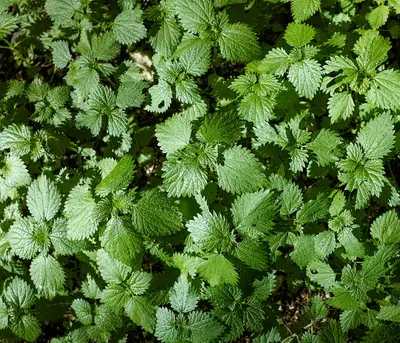
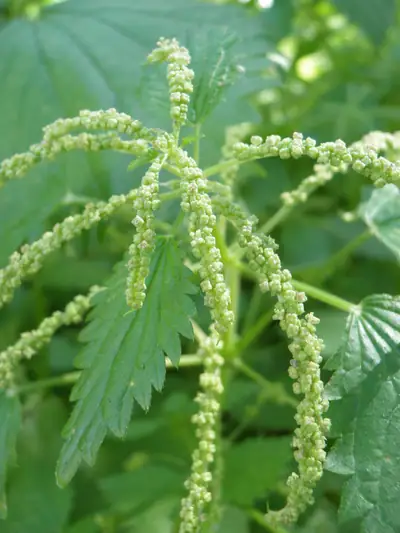
The nettle of walls and urban shade in the south, growing in winter and drying off in summer, unlike common nettle. It stings like all of them, and is told apart by the male flower spikes that lie flattened against the stem.
Town and roadside · Walls and rocks · Roadsides and waste ground · Fields and pasture
Also known aslarge-stipuled nettle
How to tell it
An annual twenty centimetres to a metre, pale tender green. Leaves are broad, almost triangular, with big teeth, and the stinging hairs are mostly on the underside and the leaf stalks. The telling sign: the male inflorescences form flattened spikes, like ribbons pressed to the stem, whereas in common nettle they are loose hanging branches. It appears in late autumn and is gone by May.
What it is confused with
Common nettle
Urtica dioica
Common nettle is perennial, taller, with narrow long leaves and hanging branched inflorescences; this one is annual, with broad almost triangular leaves and spikes flattened against the stem. Both sting.
Open sheet →What it is for
Traditionally used like other nettles, cooked, once boiling has destroyed the hairs. Do not handle without gloves: the sting burns for hours and leaves welts.
Where it occurs
Each square is an area with recorded observations of this plant. The lighter background is the set of areas where any of the entries has been observed, and serves as a reference. Note what this is not: it is not where the plant lives, it is where people record it, so trails and towns always look fuller than the mountains. Data from GBIF.