Hare's-foot clover
Trifolium arvense
Family · Fabaceae · Harmless
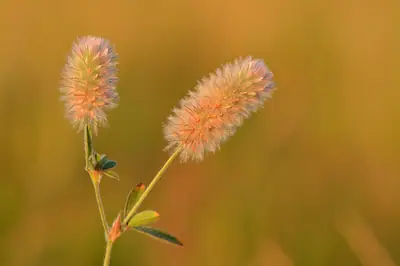
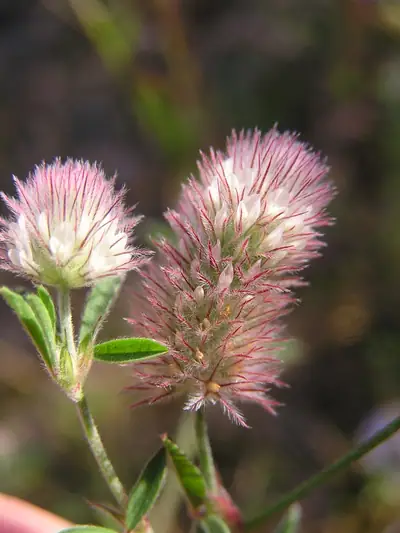


The clover nobody recognises as a clover, because its flowers turn into soft, furry heads of greyish pink, feeling like a rabbit's paw. It is unmistakable by touch.
Fields and pasture · Dunes and sand · Roadsides and waste ground · Pine woods
Also known asrabbitfoot clover, stone clover
How to tell it
Cylindrical heads two to three centimetres long, covered in long silky hairs that hide the flowers entirely, pinkish or whitish. Leaves of three narrow elongated leaflets, very unlike garden clover. A plant of poor, sandy, acid soils.
What it is confused with
No dangerous lookalikes known in the Iberian Peninsula.
What it is for
No relevant use
It is a clear indicator of poor sandy soil, and one of the best plants for explaining to a child why identification uses touch and not only colour.
Where it occurs
Each square is an area with recorded observations of this plant. The lighter background is the set of areas where any of the entries has been observed, and serves as a reference. Note what this is not: it is not where the plant lives, it is where people record it, so trails and towns always look fuller than the mountains. Data from GBIF.
Sources
Community
No approved contributions for this entry yet.
Nothing appears here without a person reading it first. Contributions do not replace the entry or its warnings: until a botanist confirms, what is written above stands.