Arabian pea
Bituminaria bituminosa
Family · Fabaceae · Harmless
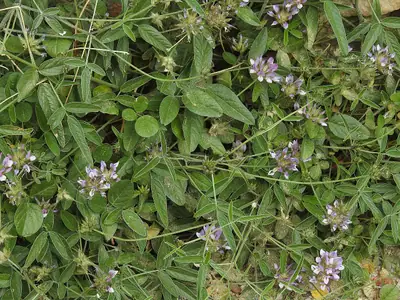
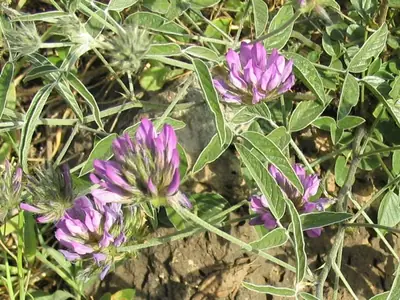


The legume with lilac flowers in a head that smells of tar when rubbed, and no other Iberian plant smells like that. Once smelled, never confused again.
Roadsides and waste ground · Fields and pasture · Scrubland · Walls and rocks
Also known aspitch trefoil, tar clover
How to tell it
Three narrow, elongated leaflets on a long stalk. A head of bluish lilac flowers atop an upright stem. The tar or bitumen smell when a leaf is crushed is the definitive mark and never fails in any season.
What it is confused with
Red clover
Trifolium pratense
From a distance the heads look similar. Rub a leaf: only one of them smells of tar. And the tar clover's leaflets are far narrower and longer.
What it is for
Fodder in dry zones, especially in the Canaries, and a folk medicine plant for external use. The smell keeps insects away, which is why it was put among clothes.
With documented traditional uses. Not a therapeutic indication and not a dose.
Where it occurs
Each square is an area with recorded observations of this plant. The lighter background is the set of areas where any of the entries has been observed, and serves as a reference. Note what this is not: it is not where the plant lives, it is where people record it, so trails and towns always look fuller than the mountains. Data from GBIF.
Sources
Community
No approved contributions for this entry yet.
Nothing appears here without a person reading it first. Contributions do not replace the entry or its warnings: until a botanist confirms, what is written above stands.