Hairy canary clover
Lotus hirsutus
Family · Fabaceae · Harmless
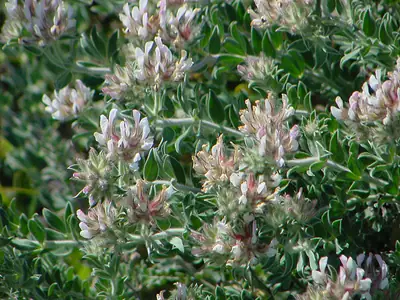
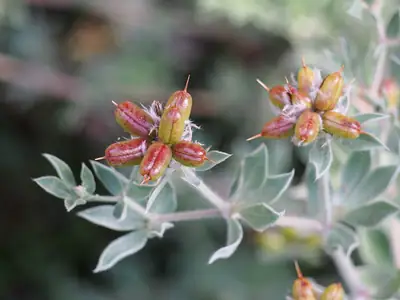


The silvery subshrub with white flowers and a pink keel, covering dry scrub and coastal sands. After flowering it carries dark red pods that colour the plant all autumn.
Scrubland · Dunes and sand · Roadsides and waste ground · Fields and pasture
Also known asgrey shrubby trefoil
How to tell it
A subshrub thirty to eighty centimetres, entirely covered in soft white hair giving a silvery grey tone. Leaves of three to five small silky leaflets. White flowers in heads of four to ten, the keel blotched pink or purple. Short reddish hairy pods.
What it is confused with
No dangerous lookalikes known in the Iberian Peninsula.
What it is for
No use
It holds sands and banks and supports solitary bees. Like the whole genus it holds small amounts of cyanogenic compounds: it does not go in the mouth.
Where it occurs
Each square is an area with recorded observations of this plant. The lighter background is the set of areas where any of the entries has been observed, and serves as a reference. Note what this is not: it is not where the plant lives, it is where people record it, so trails and towns always look fuller than the mountains. Data from GBIF.
Sources
Community
No approved contributions for this entry yet.
Nothing appears here without a person reading it first. Contributions do not replace the entry or its warnings: until a botanist confirms, what is written above stands.