Sticky fleabane
Dittrichia viscosa
Family · Asteraceae · Irritating
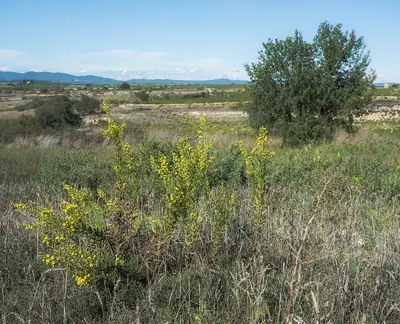
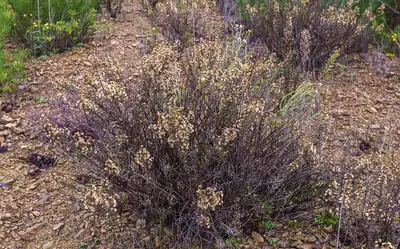


The sticky shrub that turns yellow in September and October, when almost everything else has dried, and that you smell from metres away on a hot day. Touch it once and your hands smell for the rest of the afternoon.
Roadsides and waste ground · Fields and pasture · Town and roadside · Streams and ditches
Also known asfalse yellowhead, aromatic inula
How to tell it
The whole plant is coated in a sticky resin that clings to the fingers. Lance-shaped leaves clasping the stem, pale green. Dense clusters of small yellow heads in late summer.
What it is confused with
No dangerous lookalikes known in the Iberian Peninsula.
What it is for
It was used to keep flies away and in poultices in folk medicine. A note that stays on the sheet: the resin causes contact dermatitis in many people, and is among the most frequent causes of itching after an autumn walk.
With documented traditional uses. Not a therapeutic indication and not a dose.
Where it occurs
Each square is an area with recorded observations of this plant. The lighter background is the set of areas where any of the entries has been observed, and serves as a reference. Note what this is not: it is not where the plant lives, it is where people record it, so trails and towns always look fuller than the mountains. Data from GBIF.
Sources
Community
No approved contributions for this entry yet.
Nothing appears here without a person reading it first. Contributions do not replace the entry or its warnings: until a botanist confirms, what is written above stands.