Nottingham catchfly
Silene nutans
Family · Caryophyllaceae · Harmless
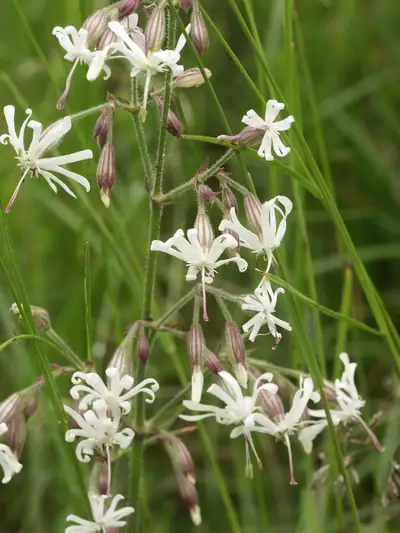
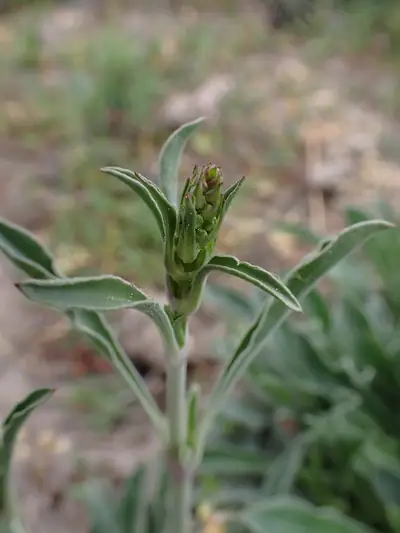


The catchfly with white downward-facing flowers that open only at dusk, its petals rolled up by day and unfurled into a fringe at night, when it releases its scent.
Uplands · Oak woods · Fields and pasture · Walls and rocks
Also known asnodding catchfly
How to tell it
An upright stem, sticky in the upper part, covered in glandular hairs that trap insects, which gives the English name. Basal leaves in a spoon-shaped rosette. Flowers hanging on one side of the inflorescence, with a striped calyx tube and five white petals deeply split in two. By day they look wilted and are not.
What it is confused with
No dangerous lookalikes known in the Iberian Peninsula.
What it is for
No use
It is worth it for something you can go and check: the same plant at dusk and at midday looks like two different plants, and it is among the best examples of night-pollinated flowers in the Peninsula.
Where it occurs
Each square is an area with recorded observations of this plant. The lighter background is the set of areas where any of the entries has been observed, and serves as a reference. Note what this is not: it is not where the plant lives, it is where people record it, so trails and towns always look fuller than the mountains. Data from GBIF.
Sources
Community
No approved contributions for this entry yet.
Nothing appears here without a person reading it first. Contributions do not replace the entry or its warnings: until a botanist confirms, what is written above stands.