Purple loosestrife
Lythrum salicaria
Family · Lythraceae · Harmless
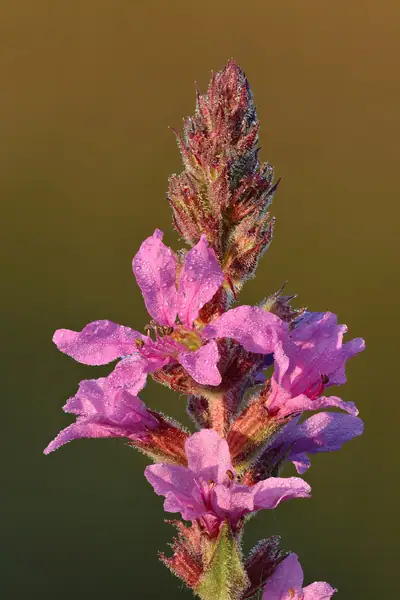
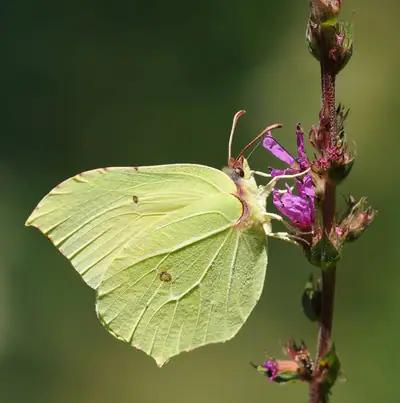


The purple wands that light up riverbanks and ditches in high August, when the rest of the landscape has dried. Visible from two hundred metres, and one of the best markers of permanent water in a valley.
Streams and ditches · Fields and pasture
Also known asspiked loosestrife, purple lythrum
How to tell it
A tall dense spike of purplish pink flowers with six narrow petals, on a four-angled stem over a metre tall. Lance-shaped leaves, opposite or in whorls of three, stalkless, clasping the stem. Always with its feet in water or waterlogged ground.
What it is confused with
No dangerous lookalikes known in the Iberian Peninsula.
What it is for
A traditional European astringent infusion. A curious note worth knowing: it is native here and one of North America's worst invaders, where it smothers entire wetlands. The same plant, opposite roles.
With documented traditional uses. Not a therapeutic indication and not a dose.
Where it occurs
Each square is an area with recorded observations of this plant. The lighter background is the set of areas where any of the entries has been observed, and serves as a reference. Note what this is not: it is not where the plant lives, it is where people record it, so trails and towns always look fuller than the mountains. Data from GBIF.
Sources
Community
No approved contributions for this entry yet.
Nothing appears here without a person reading it first. Contributions do not replace the entry or its warnings: until a botanist confirms, what is written above stands.