Phoenicean juniper
Juniperus turbinata
Family · Cupressaceae · Harmless
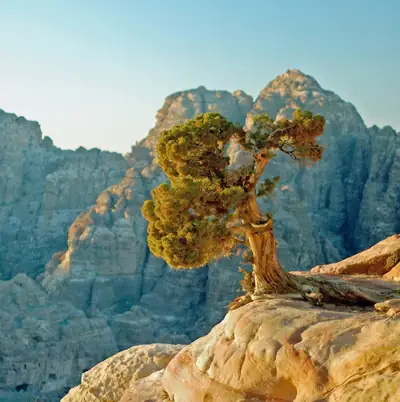
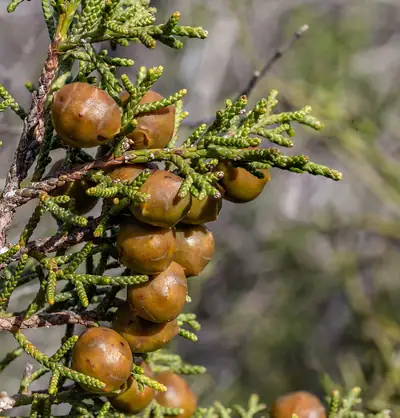


The juniper that does not prick: instead of needles it has scales pressed to the twig, like a miniature cypress. It holds the southern dunes and is among the slowest, oldest trees on the coast.
Dunes and sand · Scrubland · Uplands
Also known asPhoenician juniper, arâr
How to tell it
Run your hand over it: it is soft, unlike every needle juniper. Fine branches covered in overlapping scales. Round fruits, reddish brown when ripe. Wind-twisted habit on the dunes.
What it is confused with
Prickly juniper
Juniperus oxycedrus
Touch settles it in a second: Phoenicean juniper is soft and scaly, prickly juniper is needled and stabs.
What it is for
None to encourage
The aromatic, rot-proof wood was coveted for centuries, which is why the old juniper stands have almost vanished from the Iberian coast.
The law says
A protected species in a priority Natura 2000 habitat (dune juniper woods). Do not cut, gather, or walk off the marked paths.
Where it occurs
Each square is an area with recorded observations of this plant. The lighter background is the set of areas where any of the entries has been observed, and serves as a reference. Note what this is not: it is not where the plant lives, it is where people record it, so trails and towns always look fuller than the mountains. Data from GBIF.
Sources
Community
No approved contributions for this entry yet.
Nothing appears here without a person reading it first. Contributions do not replace the entry or its warnings: until a botanist confirms, what is written above stands.